

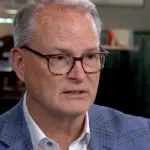

President Trump’s Justice Department has admitted that a false allegation, involving former CNN anchor Don Lemon and another journalist, appeared in the federal court filings relating to its investigation of the anti-ICE protest.
Read more ‘A desperate man is a dangerous man’: Worst yet to come as Trump crumbles
The revelation comes as newly uncovered records show that federal investigators obtained warrants authorizing the use of sophisticated surveillance technology to track down Lemon’s 21-year-old producer Jerome Richardson, even though Richardson was prepared to turn himself in.
According to Wired, the investigation followed a protest at a church in Minnesota that disrupted a service and drew national attention after Lemon and independent journalist Georgia Fort documented the incident.
Per the report, the federal authorities were looking to build a criminal case against people who were involved in the protest, including journalists who maintained they were there as journalists covering the event rather than as participants.
The contested allegation came in the affidavits in support of applications to track Richardson. The investigators claimed that the video showed Lemon, Fort, Richardson and others “chanting with agitators.”
But the prosecutors later admitted that Lemon and Fort had not been chanting.
As per Fort’s lawyers, the government admitted that the false allegation appeared in at least 15 warrant affidavits.
The admission doesn’t establish that the investigators knowingly submitted false information. It does, however, add another wrinkle to an investigation which has already been fraught with judicial pushback and disputes over the nature of the federal surveillance.
The warrants also show just how far the investigators were prepared to go in order to track down Richardson.
Federal judges in Minnesota and Pennsylvania have approved the use of cell site simulators, devices which mimic a cell tower to identify and locate a phone.
Read more Republican says he’s ditching the party over one painful realization
The tech can also harvest identifying information from devices of people in the vicinity who are not the subject of the investigation.
Investigators got the second warrant just two days before Richardson voluntarily turned himself in at a federal courthouse in Philadelphia.
Richardson had publicly stated that he expected to go into federal custody. He was released on bond that afternoon upon his surrender.
The records don’t establish that the agents actually deployed the surveillance devices.
The investigation had already met with resistance from the courts.
A magistrate judge initially denied five of the eight arrest warrant applications. The government’s request to have that decision overturned by the appeals court was also rejected, and the government has since withdrawn its request.
In the filing, the court’s chief judge states that two of the people the government was targeting were journalists rather than protesters and finds no evidence of any criminal conduct on their part.
Prosecutors then secured a grand jury indictment.
The newly released records don’t answer the question of why the investigators were seeking such intrusive surveillance or how the false allegation kept reappearing in the documents they submitted to federal judges.
Read more Legal scholar exposes the bluff behind Trump’s ‘unprecedented’ threat