









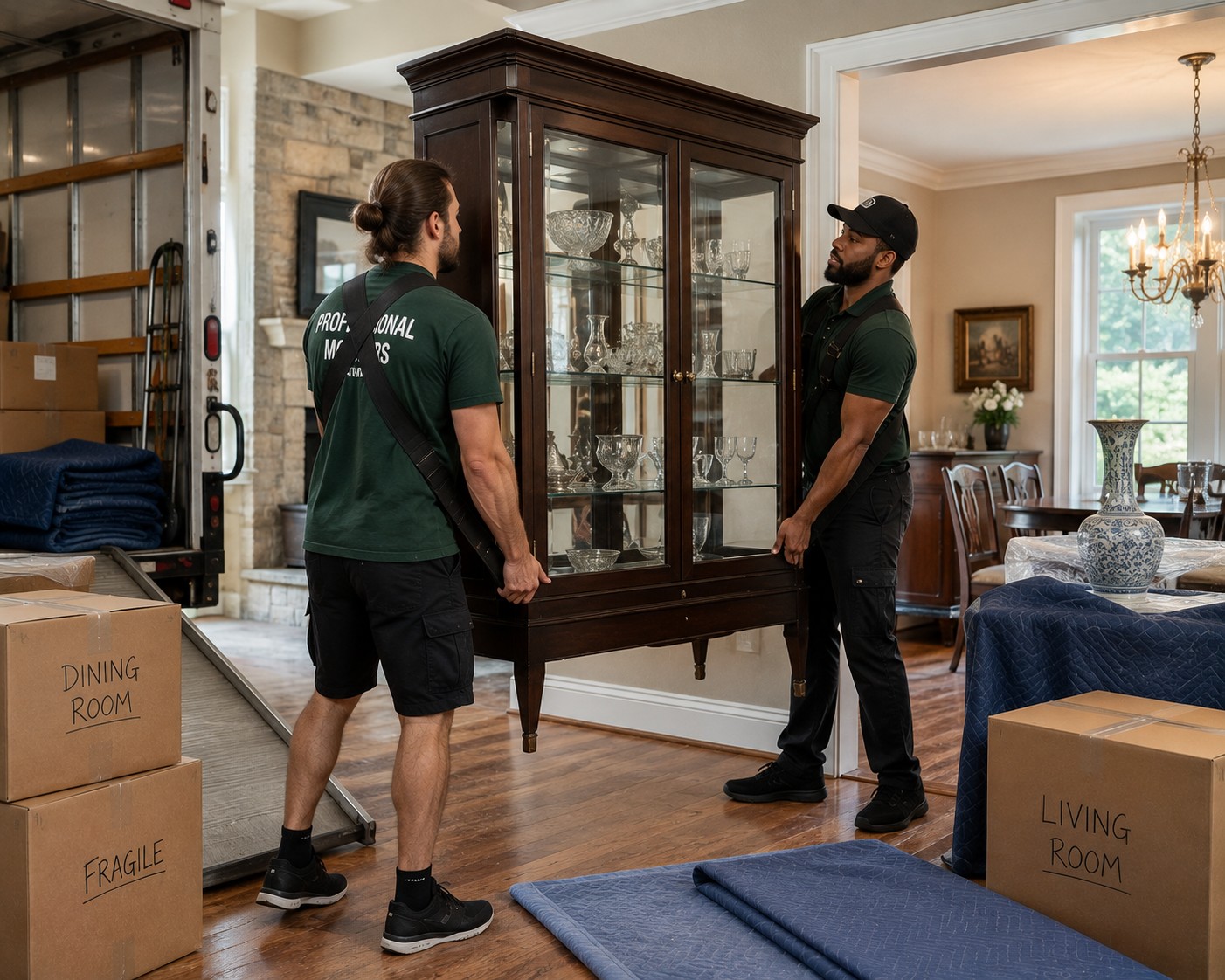
A large display cabinet can be one of the most visually impressive pieces in a home—and one of the most difficult to relocate. Tall glass-front cabinets, antique curios, china displays, and oversized shelving units combine weight, height, fragile surfaces, and awkward dimensions. A small mistake during handling can damage the cabinet, its contents, a doorway, or the flooring.
Moving this type of furniture successfully requires more than having enough people to lift it. Careful preparation, route planning, and proper protection are essential, particularly in homes with narrow hallways or complicated entrances.
Empty the Cabinet Completely
The first rule for moving a display cabinet is simple: nothing should remain inside it.
Remove dishes, glassware, books, collectibles, photographs, and decorative objects. Even lightweight items can shift during handling and damage shelves or glass panels.
Wrap fragile contents individually and place them in sturdy boxes. Keep particularly valuable or sentimental pieces separate from ordinary household goods so they can receive additional attention during transportation.
Remove Shelves and Loose Components
If the shelves are removable, take them out before attempting to move the cabinet. Glass shelves should receive individual protection and should never be left loose inside the cabinet.
Doors may also be removable on some models. If they can be safely detached, doing so can reduce the overall weight and make the cabinet easier to maneuver. Keep hinges, screws, handles, and other hardware in clearly labeled bags.
Examine the Cabinet’s Construction
Not every display cabinet should be handled in exactly the same way. A modern manufactured unit may have a relatively simple construction, while an antique or custom piece could contain delicate joints, thin veneer, carved details, or specialized hardware.
Inspect the cabinet before moving it. Identify weak areas, loose trim, cracked glass, or existing damage.
Movers in High Point can then determine whether the piece should remain assembled or be partially dismantled for transportation.
Measure the Entire Route
A cabinet that fits comfortably inside a room can become surprisingly difficult when it reaches a doorway.
Measure the cabinet’s height, width, and depth. Then check the dimensions of every part of the route: bedroom and living-room doors, hallways, staircases, landings, exterior entrances, and gates.
Account for Turning Space
Straight-line measurements are not enough. A tall cabinet may need to be tilted or rotated to pass through an opening.
Look for ceiling height above stair landings and clearance around corners. Remove nearby furniture, artwork, lamps, and decorations before the carrying process begins.
If a particular doorway appears too narrow, do not force the cabinet through it. Reconsider the route or determine whether professional disassembly is appropriate.
Protect Glass and Finished Surfaces
Display cabinets often combine several vulnerable materials. Glass doors can crack from impact, while polished wood, painted surfaces, and veneer can be scratched easily.

Use appropriate moving blankets and protective materials around the cabinet. Pay special attention to corners, handles, decorative trim, and glass panels.
Do not place adhesive tape directly on finished wood or glass. Secure protective coverings to the wrapping material instead.
Protect the Floor as Well
A heavy cabinet can damage flooring if it is dragged or repeatedly repositioned. Clear the route and use suitable floor protection where necessary.
Professional Movers in Greensboro may encounter similar challenges when handling oversized furniture, particularly when a move involves older homes with tighter doorways and unusual layouts.
Choose the Right Carrying Technique
Large display cabinets can be top-heavy, especially when they are tall and relatively narrow. Keeping the piece balanced is therefore essential.
Avoid grabbing decorative trim, doors, handles, or shelves as lifting points. Use structurally appropriate areas and coordinate movements between everyone handling the cabinet.
Never attempt to improvise a complicated maneuver simply because the furniture seems too heavy or awkward. A controlled plan is safer than repeated lifting attempts.
Load the Cabinet Strategically
Inside the moving truck, the cabinet should be positioned so that it is protected from shifting objects and unnecessary pressure.
Secure it appropriately and keep sharp-edged equipment or heavy cartons away from glass. Shelves and detached doors should be protected separately rather than placed where they can move against one another.
Movers in High Point can also organize the loading sequence around the cabinet’s dimensions, ensuring that the piece is not forced into an unsuitable position simply to save space.
Prepare the New Room First
Before delivery, clear the destination route and decide exactly where the cabinet will stand. Check the new doorway and surrounding space just as carefully as you did at the original property.
Once positioned, allow the cabinet to settle before reinstalling shelves, doors, or decorative components. Check that everything is stable before returning fragile contents.
Large display cabinets require patience from the first measurement to the final placement. Emptying the unit, protecting its delicate components, checking every doorway, and planning the carrying technique can greatly reduce the chance of damage. With careful preparation and experienced Movers in High Point, even a substantial glass-front or antique display cabinet can be moved with considerably greater confidence.




2 thoughts on “Moving Large Display Cabinets in High Point Without Risking Damage”