






The U.S. Postal Service’s effort to restrict mail-in ballots had another day in court on Thursday in Massachusetts, and the Justice Department ran up against the judge’s citations from the U.S. Constitution.
Read more Trump turns White House into a ‘fortress’ as security fears grow
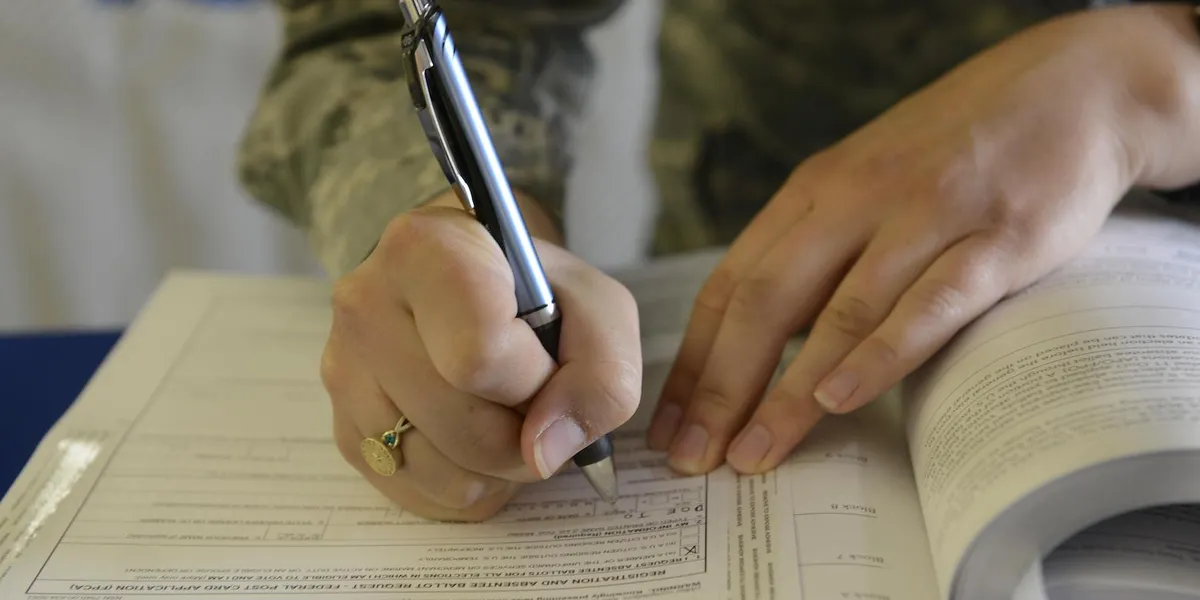
President Donald Trump’s executive order and the new USPS rules require states that choose to participate to submit voter names, addresses and unique ballot barcodes through a secure Federal Ballot Mail Portal. Ballot envelopes must meet USPS design standards, including official markings and barcodes that match that same portal data.
The federal portal is then approved by election officials, not the general public, . The rule applies to ballots containing federal races. The implementation has been fraught with legal challenges and court restrictions, given that the Constitution requires elections to be handled by the states.
Critics claim that the process is Trump’s attempt to ‘rig” the 2026 elections. Legal analysts fear that the Supreme Court conservatives are “chopping at the bit” to significantly restrict vote-by-mail.
Cambridge freelance reporter John Hawkinson was in court Thursday to follow the debate between U.S. District Court Judge Indira Talwani and the Justice Department.
The judge remarked that 70 days out from the Nov. 3 election, “I have nothing from USPS, I don’t have anything that will tell me whether this will have programming invitation portals, upload a spreadsheet 10 at a time? 10,000 at a time?” relayed Hawkinson’s account of the debate. As of Thursday, there are 61 days until the election. However, some states, like North Carolina, begin sending absentee ballots out as early as Friday, Sept. 4, the Secretary of State’s website shows. The state with the latest vote-by-mail ballot start date is California, on October 5, which is just 32 days away, its Secretary of State website says. All other states send their ballots out before then.
Nevada’s elections chief announced this week that he has little faith in the federal government’s ability to implement any of the new rules in time before ballots are delivered.
The Justice Department told the judge in court that the final rule from USPS, “I believe, specifies [that] Excel files can be uploaded to the portal. They don’t need to type it in.”
The judge noted that “step one” would not be to upload the spreadsheet. “Step one is getting approval of the ballots,” she posited.
Read more Hidden provision in Trump’s signature bill comes back to haunt Republicans
“Step zero, under the rule, is a notification of intent to open a line of communication,” the Justice Department claimed. There were a few other optional steps like designing an envelope.
“I’m just trying to do the ones that matter,” the judge cut off. “I think every state has obligations under other laws to allow people to use the mail. So ‘if you want to use it’ isn’t really an option.”
“Out of respect for federalism, I just want to clarify states can do what they want,” the Justice Department claimed.
That’s when Hawkinson said the judge smiled.
“We have important issues here,” the judge began. “You say, ‘if you wish to use that.’ You mean ‘if the legislatures of the state?'”
The DOJ said, “yes.”
“And every state’s legislators have chosen?” the judge asked. The DOJ agreed.
“You’d be asking people, if they don’t want to use the mail, to go back and change their laws?” the judge said.
The DOJ claimed they didn’t follow her logic.
“Well, you say it’s optional. But the states have already done this. USPS is aware of that. We have a system that allows states to make that decision — federalism,” she quipped.
The DOJ went on to claim that it would take only two days for the USPS to process everything.
Read more Why allies are giving in to Trump’s demands —and Canada and China are not