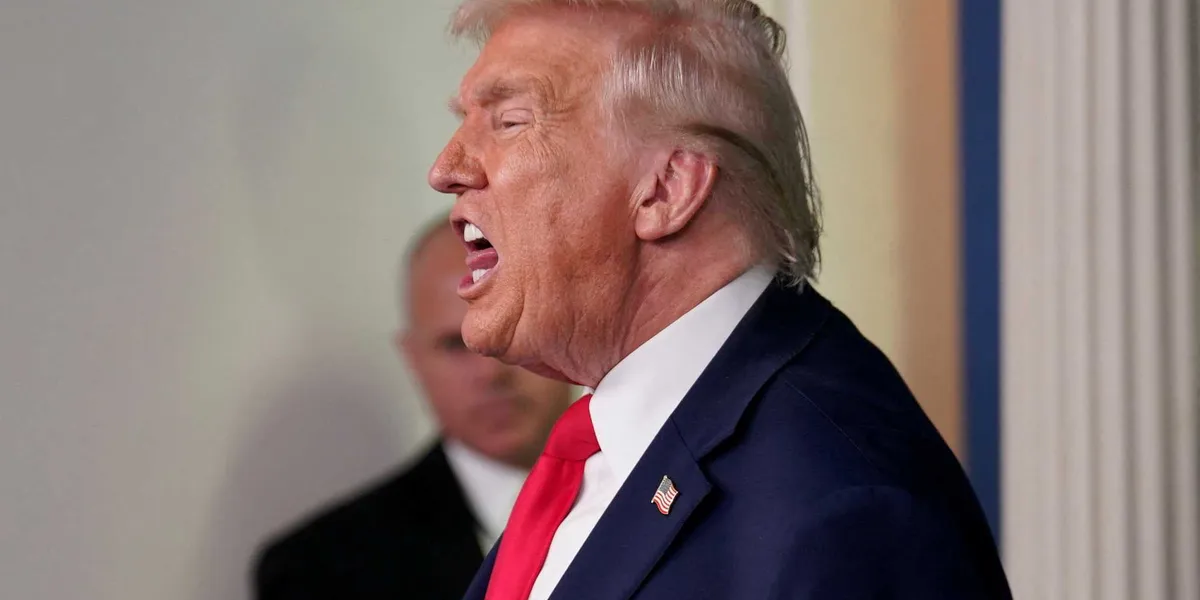
Warning of a major rupture of the post-WWII global order, two experts who spoke to the New York Times in a new podcast said that President Donald Trump is “abdicating” the country’s global influence “at a very, very difficult time,” with one claiming that his MAGA promises have actually been “making America little at last.”
Read more Trump’s attacks threaten to backfire in new fight to oust Fed’s Lisa Cook
On Wednesday morning, the Times released a new edition of its podcast, “The Opinions,” hosted by Lydia Polgreen, which dug into the state of the post-WWII global order nearly two years into the second Trump administration, which has made unprecedented moves to pull the U.S. back from its spot as de facto world leader. As part of the discussion, she welcomed Rahmane Idrissa, “a political scientist and historian based at Leiden University in the Netherlands,” and Kaiser Kuo, the Beijing-based host of a podcast focused on Chinese current affairs.
“The global order that’s been in place since World War II is falling apart, and no one knows exactly what will replace it,” Polgreen said. “The United States has been stepping away from its role as a leader, while China has emerged, in many ways, as a peer power.”
Providing context for the conversation about “the decline and fall of the American hegemony,” Idrissa described a “hegemon” power as akin to the conductor of a symphony, but in this case, one acting to direct the entire global order. Later, she continued that metaphor to describe how the U.S. has retreated from that spot under Trump.
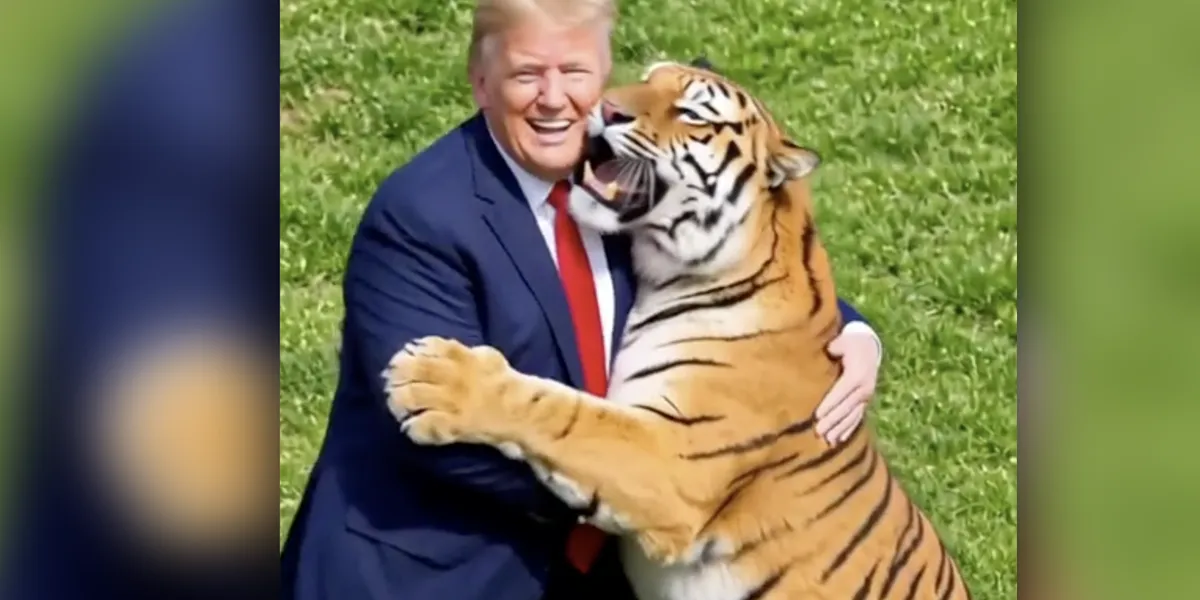
Read more Trump’s bizarre overnight posting spree paints him as a lion playing with a tiger
“But Trump has decided that the U.S. is no longer the conductor,” Idrissa said. “The U.S. is now a player in the orchestra, a big-bully player. He came to power with this slogan, ‘Make America Great Again.’ But what he’s doing, basically, is making America little at last. Because the idea is now: We are going to make America a nation-state like others. It’s no longer this kind of top power, this hegemon who is hovering around the world. And since it has this very, very large amount of power, it can pretty much do what it wants. Which, of course, the adventure in Iran is revealing that not to be the case. But this is the route that he has taken.”
Idrissa also noted that U.S. allies like Canada and Europe “really wanted the American hegemonic system to continue, because they drew lots of benefits from it — like the security guarantees of the Europeans, trade in the case of Canada.” Now, their recent hostile reactions to some of Trump’s new global economic and defense policies can be understood as “traumatized.”
“[We] are in such a trap right now, I think, where the United States has abdicated its traditional role of provision of public goods, and it’s unclear that China is willing to do all of that. In some areas, it clearly is,” Kuo added. “In development, in infrastructure lending, in provision of manufactured goods, in absorbing all the demand for commodities. There are a lot of things in which China has stepped up, but it’s clearly shown no appetite for much of the rest of it. Look at its relative absence of a role in the Iran crisis. It’s not going to step in. And the United States doesn’t want it to. The United States seems hellbent on preventing China from filling that role.”
Read more The very real concern Trump might be dumb enough to bumble into WW3