








The term “doomscrolling” describes internet users going out of their way to find bad news online. According to psychiatrists and psychologists at Harvard University, the practice is bad for one’s mental health. But it’s also widespread, with everyone from liberal and progressive bloggers to far-right evangelical fundamentalists doing it. And a psychologist interviewed by the India-based WION (World Is One News) has strong views on why “Doomsday scenarios” are so popular in 2026.
Read more New court battle reveals Trump’s slush fund far from dead: expert
On the left, “doomscrolling” might take the form of liberals and progressives who, during Donald Trump’s second presidency, believe the United States is sliding into a political dystopia. And many far-right evangelicals are obsessed with the “End Times,” focusing heavily on the New Testament’s Book of Revelation. Mainline Protestants and Catholics also read the Book of Revelation, but it isn’t nearly the fixation for them that it is for far-fight Christian nationalists and white fundamentalist evangelicals. Typically, End Timers will point to a verse in the Book of Revelation as proof that a nuclear World War 3 is just around the corner.
Journalist Anamica Singh, writing for WION, explains, “Lately, the word ‘Doomsday’ is everywhere. Bulgarian mystic Baba Vanga has been linked to prophecies about the end of the world; the glacier in Antarctica nicknamed ‘Doomsday’ is making headlines as the planet warms, and even the recent total solar eclipse caused a scare. When people learned that the eclipse, the peak of the Perseids meteor shower and a six-planet parade were happening all on the same day, they started screaming ‘Doomsday’ on social media…. Why is it that people love talking about the end of the world?”
Singh continues, “This planet is their home, so why would you deliberately talk about it reaching Doomsday? What attracts people to the word itself — ‘doomsday’ — when we know it doesn’t mean anything good?”
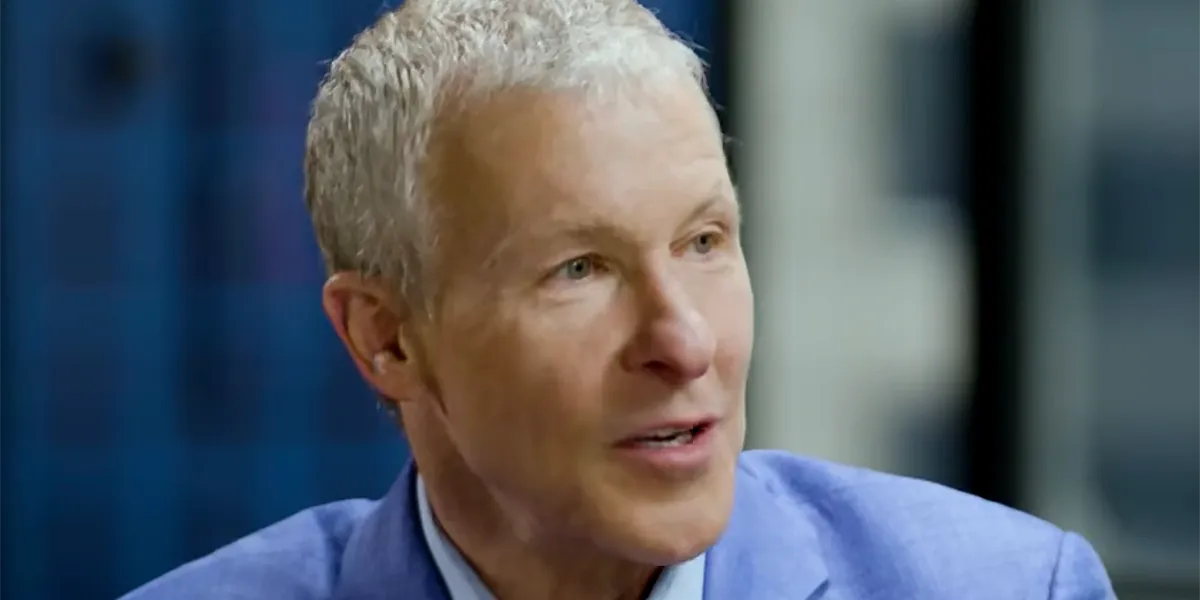
To answer those questions, WION interviewed Dr. Munia Bhattacharya — a psychologist who works at Marengo Asia Hospital in Gurugram, Haryana, India.
Read more ‘Reckless’ Trump putting himself and troops in danger: ex-Army commander
Bhattacharya told WION, “Our fascination with the end of the world is hardly new. Every generation has had its own version of a Doomsday prediction. What changes is the trigger … When several interesting astronomical events happen around the same time, people naturally start looking for a connection.”
According to Bhattacharya, people who seek out “Doomsday scenarios” are looking for ways to cope with “uncertainty.”
Bhattacharya told WION, “When life already feels unpredictable, a dramatic explanation can actually feel easier to process than uncertainty. Instead of ‘I don’t know what is going to happen,’ the mind gets a definite story: This is what is going to happen.”
Read more Trump warned he lacks the power to block NYC tax he’ll be forced to pay