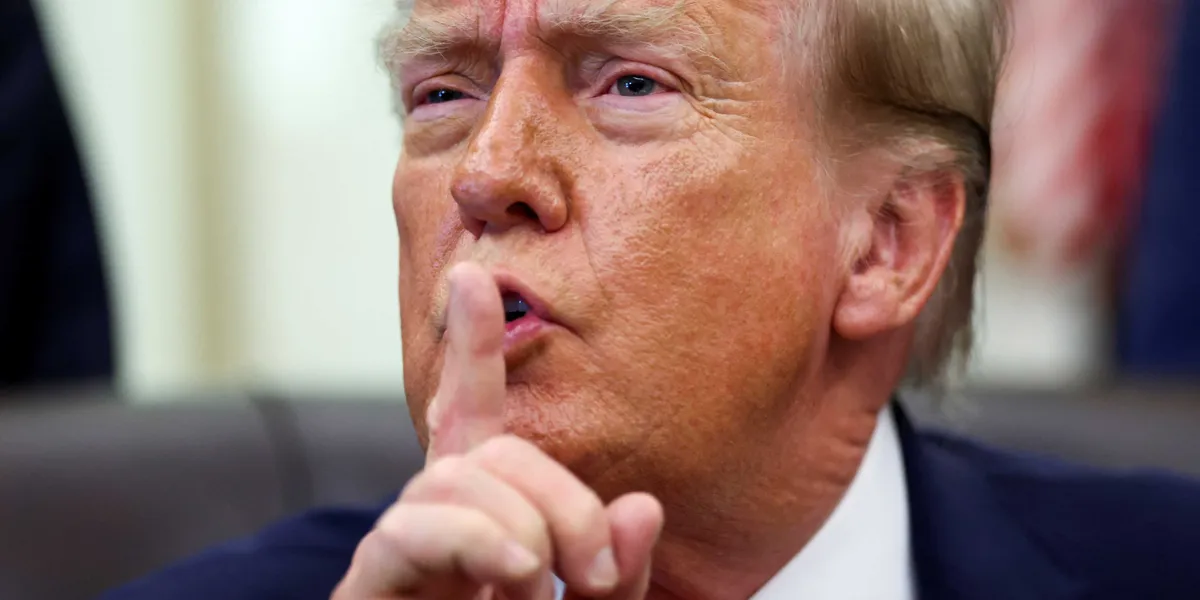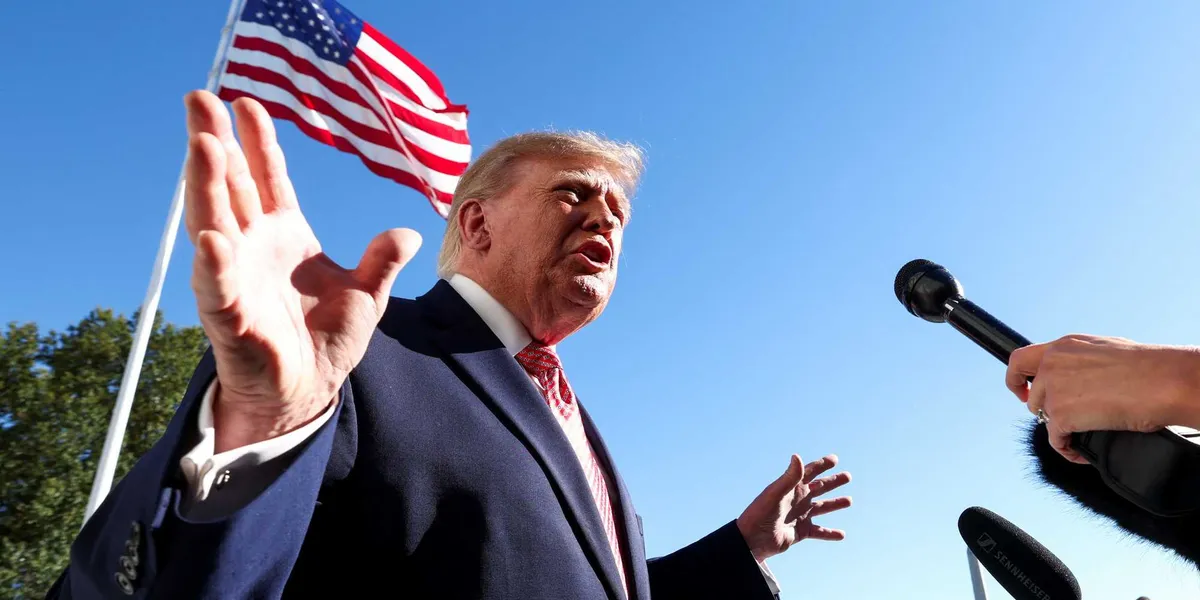






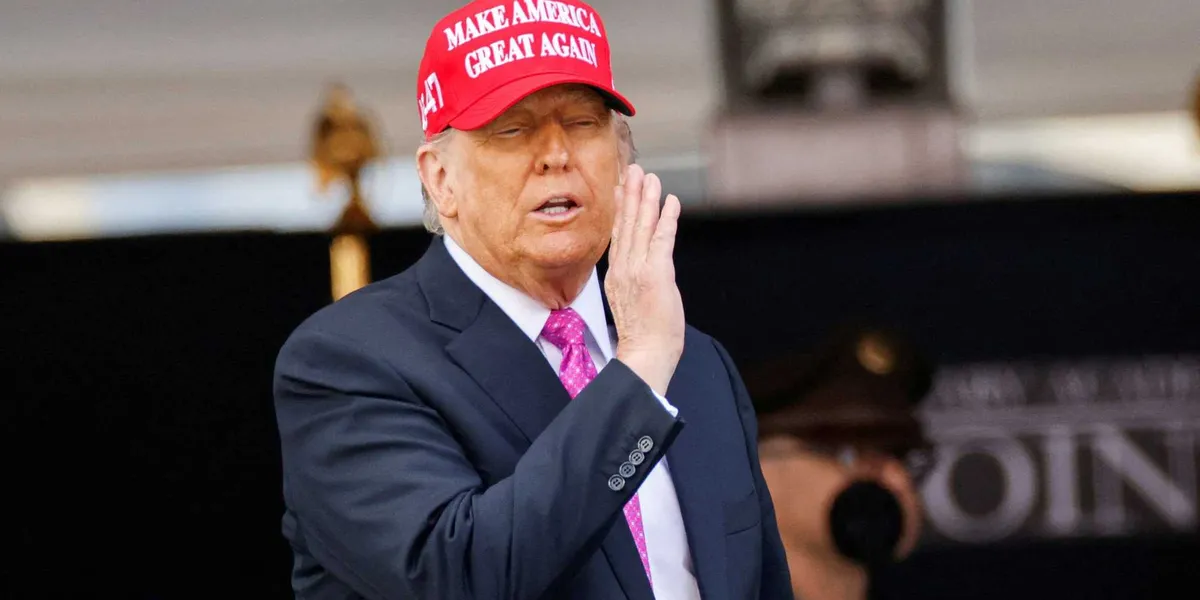
“Two years ago our country was dead. Today we are the hottest country in the world. America is respected like it’s never been respected before…. Our stock markets are at their highest point of all time..”
Read more A little-known loophole could help Trump halt the midterms with one firing
The American public has gotten so used to Donald Trump’s bizarre hyperbolic rhetoric that we usually don’t pause to try to understand what it means. By bizarre I mean his apparently compulsive need to constantly speak in[ glittering generalities, meaningless hyperbole, and superlatives. It’s closer to what George Orwell called “Duckspeak” than normal speech [In 1984, Big Brother mandated a language that was English, but was also mindless, repetitive, with hardly any conscious thought]. And as Trump tells it, in such instances he is always the hero of the story. There is hardly a speech in which Trump does not use phrases like “the likes of which nobody’s ever seen before,” “Numbers we’ve never seen,” or “Like nobody ever thought possible.”
One news agency reported that he had used such phrases over 200 times this year already. Of course, such extreme declarations usually cast Trump himself in near-messianic terms — not just as an observer of these unprecedented feats, but their sole and irreplaceable author. This type of vacuous repetition has the effect of hypnotizing his already admiring audience, holding them in place. For those of us who are not enthralled with the man and his actions, this hypnosis becomes paralysis. There is simply nothing there to latch onto and undo.
So, we fact check.
Trump’s grandiosity isn’t limited to vainglorious claims about rescuing America from the dangerous vermin and garbage ridden hell that he apparently inherited from Obama and Biden, but it frequently appears in much more personal territory, for example, when he preened that no one had ever seen a body as beautiful as his, that he is a ‘stable genius,” that he had been “the most effective President for the black community since Abaham Lincoln,” [and] or when he portrayed himself as Jesus.
Because such bragging is invariably shot through with lies and falsehoods, Progressives and the mainstream media usually respond to Trump’s chest-thumping by fact-checking him. So, for example, following Trump’s speech about election security, the entire media echo chamber was filled with corrections of his facts.
Trump constantly lies and so we constantly fact-check him. It’s as if we believe that the best we can do so often is to defend objective reality in the hopes that people see the light. What we don’t do is try to understand why his lying and boasting is so ubiquitous. Is it that we don’t understand it Or might it even be that we are embarrassed by it and so keep trying to dig into it as if there was some hidden and perverse sense and logic?
If we did ask why Trump has to lie so much, we would find that the answer is hiding in plain sight. You don’t need to be Sigmund Freud to intuitively understand that someone who publicly boasts all the time must privately struggle with feelings of inferiority and inadequacy. This is simply the normal functioning of the mind. Psychologists have long known that our minds are programmed to avoid or otherwise get rid real, imagined, or predicted feelings or situations that we fear will be too psychically painful. One person might get rid of a bad feeling through denial. Another might project this feeling onto someone else. Many people, however, do what Trump does—they exaggerate the opposite. So if someone (usually a man) is especially threatened by situations that might make him feel helpless, unimportant, or shamed in some way, that man – Donald Trump–will automatically try to mitigate such a threat by arguing to himself and others that he is actually powerful, special, and perfect.
Read more John Oliver is back and he wants to know if Mitch McConnell is still alive
But this psychological dynamic–the narcissism and the lying–isn’t voluntary or optional—it’s obligatory. Trump simply can’t help it. He is psychologically compelled to repeatedly assert and lie about his unparalleled greatness. He has no psychological freedom to do otherwise lest he unconsciously invite his secret fears to rear their heads, fears that he really is a loser, not a winner, weak not powerful, inferior not superior, and insignificant rather than heroically important. To Trump, any implication that he’s loser is akin to a visitation from the Grim Reaper.
Exposing and correcting Trump’s “alternative facts” is necessary but hardly sufficient. The question is whether or not a psychological explanation has any legitimate political use, or is it a kind of category error — like bringing a diagnosis to a policy fight?
I would argue that when we understand Trump’s internal world in a clearer and more nuanced way, we can better predict his actions. His personal psychology too often dictates his political and policy actions and everyone intuitively understands this. It’s no wonder that his cabinet and other world leaders seek various economic and political advantages from Trump by kissing his behind.
If someone in public life seems to be shaming or criticizing him, his response is reflexively vicious. Reuters tallied that at least 470 people, organizations, and institutions have been targeted for retribution since Trump took office–an average of more than one a day. When Gavin Newsome mocked and embarrassed him on social media, Trump took to calling him New-scum. And yet such exchanges show how easy it is to get to Trump. Newsome’s jabs didn’t wound him — someone this defended against shame doesn’t stay wounded — but it worked as a hook, reliably pulling him into reacting on his opponent’s terms instead of setting the agenda himself.
Psychological insight, then, isn’t a substitute for fact-checking Trump’s claims. It’s an early-warning system for how he’ll behave, and a map of which pressure points reliably make him move.
Michael Bader is a veteran psychologist, psychoanalyst, and author with over 40 years of clinical experience. He specializes in the intersection of psychoanalysis, culture, and politics, frequently writing on the psychological dynamics driving modern public discourse.
Read more Billionaire accuses Trump of ‘threatening’ him as he alleges massive fraud