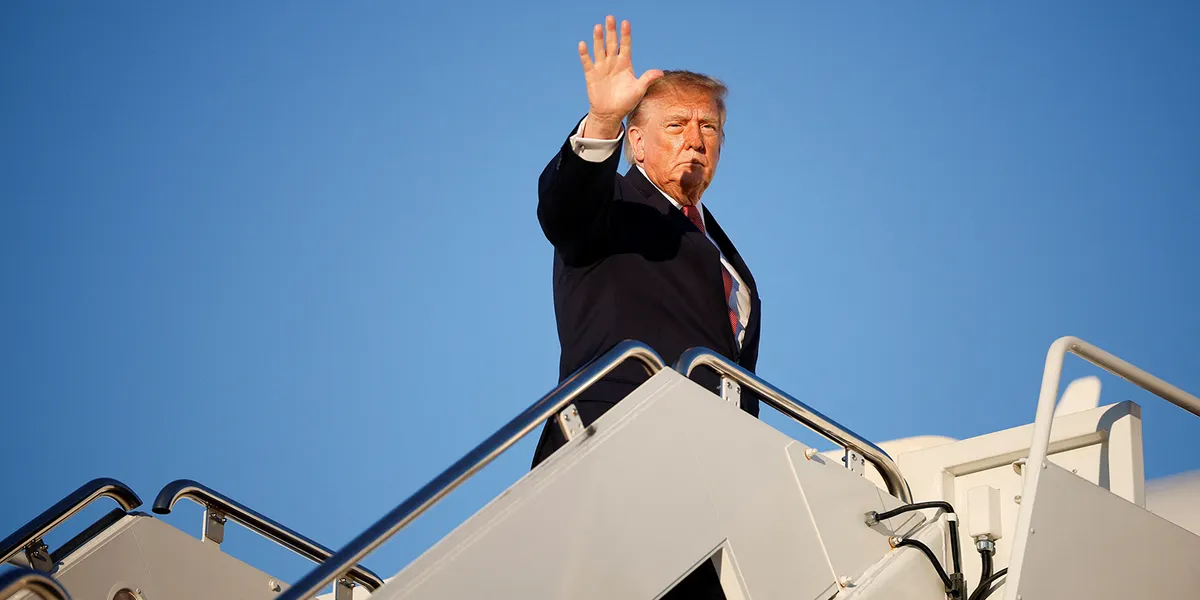









Trump’s war with Iran has resumed (it never really stopped). The U.S. is sending more warplanes to the Middle East. Two American service members were killed in an Iranian missile attack on Jordan, and a third is missing. The Strait of Hormuz is again closed. Meanwhile, Mojtaba Khamenei issued his first statement following his father’s funeral, saying “revenge is the will of our nation” and that Iran would act against “criminals whose names are known.” In response, Trump threatened to “completely decimate and destroy” Iran if assassination threats against him were acted upon.
Read more Iowa is acting ‘differently’: Expert issues stark warning on GOP’s future in red state
How long can Iran continue the war? Its economy appears reasonably stable; it has exported oil sufficient to meet its needs. Its population has become used to sanctions and economic pain, and has no voice, in any event. As shown by its attack on Jordan, as well as those on Bahrain, Kuwait, Oman, Syria, and Qatar, Iran has ample missile stocks and has also become more adept at evading U.S. air defense systems.
How long can the U.S. continue the war? America doesn’t have sufficient munitions to maintain the current bombing campaign indefinitely. World oil reserves are almost depleted, which means that continued blockage of the strait will cause even more economic pain. Oil has again topped $90 a barrel. Plus, there are midterm elections to think about.
So, what’s Trump’s likely next move? I’ve made the rounds of the foreign policy advisers and experts I consulted with in early March, asking what they believe Trump will do now.
Their responses are arrayed below. I’d appreciate hearing from you as well, about what you think Trump will do.
1. Continue the air strikes
Several believe the most likely scenario is for Trump to continue to rely on air strikes against Iran’s military, leadership, and infrastructure. The purpose of the strikes would be to further reduce Iran’s capacity to attack shipping targets, or at least obtain concessions at the bargaining table. The strikes would be aimed at Iran’s transportation infrastructure.
But Trump has pursued much of this strategy for months now. Iran hasn’t budged, and it has maintained its capacity to attack ships in the strait. This is also draining U.S. stockpiles of ammunition and leaving America unprepared for other conflicts around the world. It’s estimated that merely replacing the most crucial weapons expended in the Iran war so far will take at least three years of defense production.
Still, this strategy may be the least bad of several bad alternatives.
2. Make life in Iran impossible
A second scenario is for Trump to ramp up the bombing campaign to include attacks on Iran’s water infrastructure, such as dams and desalination plants — making life in Iran precarious and desperate.
But this could create a humanitarian catastrophe leading to mass deaths and a flood of refugees. It would also turn the world against the United States. In addition, Iran’s leaders have made clear that if the U.S. strikes the water infrastructure needed to keep their people alive, Iran will retaliate in kind against the Gulf States. It has already hit a water desalination plant in Kuwait. The U.S. would have difficulty defending Gulf States against this sort of attack.
Read more Trump’s economy hasn’t sunk the GOP because the Dems blew it: analysis
Still, this strategy may be advocated by Trump’s most belligerent advisers, such as Pete Hegseth, who could convince Trump that it will show Iran and the world how tough and strong Trump and the U.S. are.
3. Launch a ground invasion
A third possibility is for the U.S. to invade Iran. This option can’t be ruled out, because Trump has mentioned it several times. Although highly risky, it’s the only option that could possibly achieve Trump’s stated objective of finding and destroying Iran’s stockpile of enriched uranium. Trump may also believe that, with the lives of American ground troops at stake, the U.S. public will rally around him, perhaps even giving Republicans an advantage in the midterm elections.
But the U.S. lacks the manpower and logistical support to mount a successful land invasion of Iran. Even seizing tiny Kharg Island would be highly risky, given Iran’s strategic advantage over the strait. Trump also knows that if he loses more American troops, public opinion could swing more sharply against him and his war.
Still, an invasion can’t be ruled out.
4. Declare victory and go home
The final option is for Trump simply to give in to Iran’s demands, declare that he has solved the problem and gotten the best deal imaginable, and walk away. The ill-fated “memorandum of understanding” was a move in this direction.
But Iran interpreted that agreement as giving it control over the strait — and still claims control. Allowing Iran to command the strait would leave the U.S. far more economically vulnerable than it was before February 28, when the strait was open and Trump launched his war. It’s hard to see how Trump could accept this humiliating outcome.
Still, Trump could decide that this is the least damaging option and hope to sell it as a win, figuring he can get a plurality of Americans to believe anything he says.
Hence, today’s Office Hours question: What will Trump do in Iran NOW?
Robert Reich is a professor of public policy at Berkeley and former secretary of labor. His writings can be found at https://robertreich.substack.com/
Read more The margins are razor-thin —but one party will likely Congress: experts