






Sounding the alarm about “unchecked power… increasingly wreaking havoc” across the U.S., a pair of Harvard legal scholars wrote in a new piece for The Hill about their surprising suggestion to save the country and begin “speaking law to power.”
Read more Even Fox News seems rattled by Trump’s latest rage boil
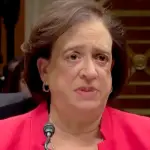
Alexandra Natapoff and Guy-Uriel Charles are professors at Harvard Law School, who also co-edited a recent book featuring essays from the school’s faculty about the state of the country and its legal systems. In a Monday morning piece for The Hill, they warned of the seismic changes occurring under President Donald Trump, though they avoided mentioning him by name, calling out the Supreme Court as they lamented the “ordinary people” getting hurt by the current system.
“Unchecked power is increasingly wreaking havoc. As its campaign and voting rights decisions make clear, the Supreme Court is unconcerned with the unequal deployment of economic and political power,” the pair wrote. “As a result, our electoral process is dominated by concentrated wealth and private influence. The fearsome power of the criminal system has always been at best tenuously restrained by law. Today, it has openly muscled its way into political waters as the executive branch flaunts its authority to prosecute and pardon. As we have both argued for years, it is ordinary people who ultimately pay the costs of such governance failures, losing their political voices, autonomy, money, safety, and even ultimately their freedom.”
They continued: “The problems with unchecked power in America are on the rise across the board. From the executive branch to Congress, in finance, media, and the technology sector, concentrated power has increasingly been let off the democratic leash. Public actors ignore the interests of millions of Americans. Private interests make public-facing decisions of national import. Ordinary people are getting thrown under the political bus.”
Read more Trump secretly replaced the Rose Garden lawn with statues of controversial figures
The idea of the “rule of law,” they argued, means a “commitment to resolve differences and disagreements through open legal discourse and process,” and not what those like Trump and his allies have treated it like, “raw assertions of power, coercion, or violence.”
To reverse this course, they urged for the creation of “an inclusive, community-wide public conversation about those laws, and how we would actually like to run our polity together,” and preemptively tried to counter the most likely arguments against such an idea from those who would prefer more overt action.
“Calling for more discourse or better conversation can sound like weak medicine against abusive power,” the pair wrote. “But law is one of those places where words and ideas matter. In the voting sphere, words define rights that enable ordinary people to exercise extraordinary influence. In the criminal system, we can get people out of jail by using our words, no crowbar required. It matters to people of every faith and of no faith how we construe freedom of religion under the First Amendment. The definition of the word ‘citizen’ affects millions of families. Coming together to talk about these matters is not weak medicine; it is figuring out how we want to handle them together.”
Read more Trump’s no-bid contract spree is worse than anyone thought —and it’s just the beginning