






WASHINGTON — Republicans are campaigning to keep control of Congress for another two years, but their message about being the “grown-ups” in the room keeps getting overshadowed by public feuds that have sidetracked work on major legislation.
Read more Trump’s secret weapon —and the one thing that makes world leaders bow
After enacting large swaths of their agenda during the last year and a half, GOP lawmakers can’t seem to agree on what comes next, with senators openly debating each other on social media and a group of far-right House lawmakers blocking work on the floor, forcing the speaker to send them home early for the Fourth of July break. The infighting and limited time in session could prevent Republicans from notching any more wins before voters head to the polls in November.
The disagreements, largely over a voter identification bill known as the SAVE America Act, have held up the annual government funding measures needed to avoid another shutdown and a defense policy package that provides lawmakers one of their best opportunities to shape the country’s military objectives.
Agreement on a farm bill to address agriculture and food safety net programs is years overdue with few signs of true momentum. And lawmakers are no closer to reauthorizing a foreign surveillance program that lapsed earlier this year for the first time in decades.
On top of all that, House Speaker Mike Johnson, R-La., wants to use the complex budget reconciliation process to pass a third party-line bill, though his Senate counterparts aren’t fully on board with that idea.
Johnson said during an interview on “Fox News Sunday with Shannon Bream” in early July that he believes the package could include elements of the voter identification bill, possibly clearing the way for other legislation to move forward. He said the reluctance from some Republican senators “is based upon what they think may be in it.”
“What we’re planning to do is send over a bill that will be irresistible for any Republican. A really incredible piece of legislation that will get the job done, meaning that we will continue to increase affordability; we will reduce fraud, waste and abuse in government; and we’ll secure elections,” Johnson said. “Every Republican will vote for that if packaged correctly. And that’s what we’re planning to do right now.”
Lawmakers’ time to get that done will be extremely limited when combined with other work on Congress’ to-do list.
Both chambers return to the nation’s capital on July 13 but will be out for nearly all of August and October. In total, the House will be in session for about 24 days and the Senate at work on Capitol Hill for approximately 28 days ahead of the November midterm elections.
GOP argues for keeping majorities
Senate Majority Leader John Thune, R-S.D., said during a late June press conference he wants to “get as much done as we can in the amount of time we have left between now and the midterm elections.”
“There are things that I believe will create a record of accomplishment that our candidates can run on that will enable us to take an argument to the American people that will persuade them that they want to keep majorities here in Congress, in the United States Senate and in the House, that are Republican to work with the president to get good things done for this country,” he said.
While GOP senators “have differences of opinion,” Thune said, they agree that their goals should be “to keep the country safe, to put more money in the pockets of the American people and to give them better opportunities to get ahead.”
Republican senators, however, do not agree when it comes to the SAVE America Act that would, among other things, require proof of U.S. citizenship to register to vote and a photo ID to cast a ballot.
Read more ‘Sundowning’ Trump has ensured America’s ‘decline’: Nobel economist
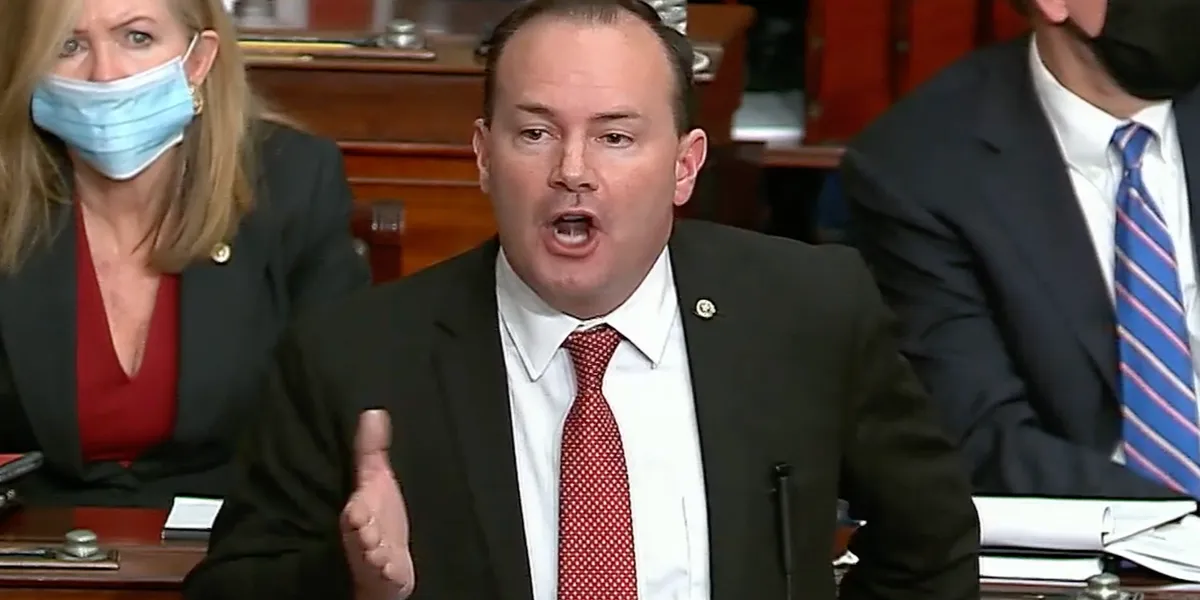
Utah Republican Sen. Mike Lee posted to social media in early July that the chamber must pass that package, even if that means changing the rule that requires at least 60 lawmakers vote to cut off debate. Republicans control the chamber with 53 seats.
“History will not look kindly on us if we don’t pass the SAVE America Act,” he wrote. “Neither will voters.”
Texas Republican Sen. John Cornyn responded in a post of his own: “Then show us the votes!”
Filibuster fight
Michael Thorning, director of structural democracy at the Bipartisan Policy Center, said the slim majority in the House and narrow majority in the Senate combined with President Donald Trump’s focus on the voter identification bill has led to “a lot of negotiation between different factions within the party about what is going to be on the agenda.”
While the House can pass bills with a simple majority, the Senate needs bipartisan support for most bills to move past procedural votes. This requires compromise between Republicans and Democrats in the upper chamber on some of the more pressing and politically fraught issues.
That requirement often results in changes to House-passed bills or an inability to move forward with them at all — leading to considerable tension between GOP lawmakers who want to keep the procedural step and those that want to get rid of it.
The 60-vote threshold gives Democrats a chance to force compromise, but it also gives them a way to slow down or gridlock the Senate during an election year, compounding the challenges Republican leaders face from within their own party.
This year is no exception. Democratic leaders must balance calling on voters to reject Republican incumbents while on the campaign trail and then work with some of those very lawmakers to negotiate certain must-pass bills when back on Capitol Hill.
“This, really unfortunately, is a part of a longer term trend that we’ve seen for quite a while in Congress, which is that the minority party does not have a lot of incentive to cooperate with the majority,” Thorning said. “And so, you know, it’s not unusual to see the minority party sort of trying to posture and position itself to deny the majority party perceived legislative wins.”
That calculation is particularly acute on government funding ahead of the Oct. 1 deadline, following three shutdowns of varying impact and length during the last year.
“I would say on appropriations, the difficulty there on funding the government is that it’s never clear which way the blame is going to cut,” Thorning said, adding it would be “a pretty risky assumption” that a funding lapse this year would be blamed on Republicans.
“If Democrats were to deny the appropriations process from going forward and the government were shut down, it’s not clear who the voters would blame,” Thorning said. “And that would really be happening for the first time ever right up to an election. You know, voters have rarely had the opportunity to weigh in quite that proximate to a government shutdown on who they do or don’t blame. So that’s sort of uncharted territory.”
Read more Trump busted for claiming credit for something he didn’t do