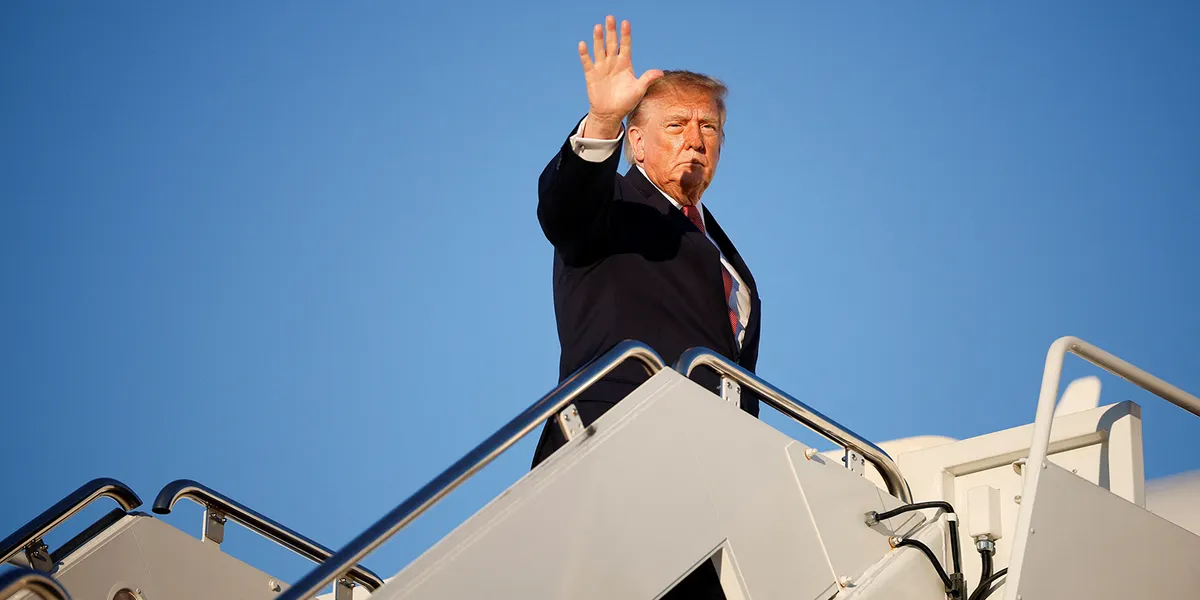

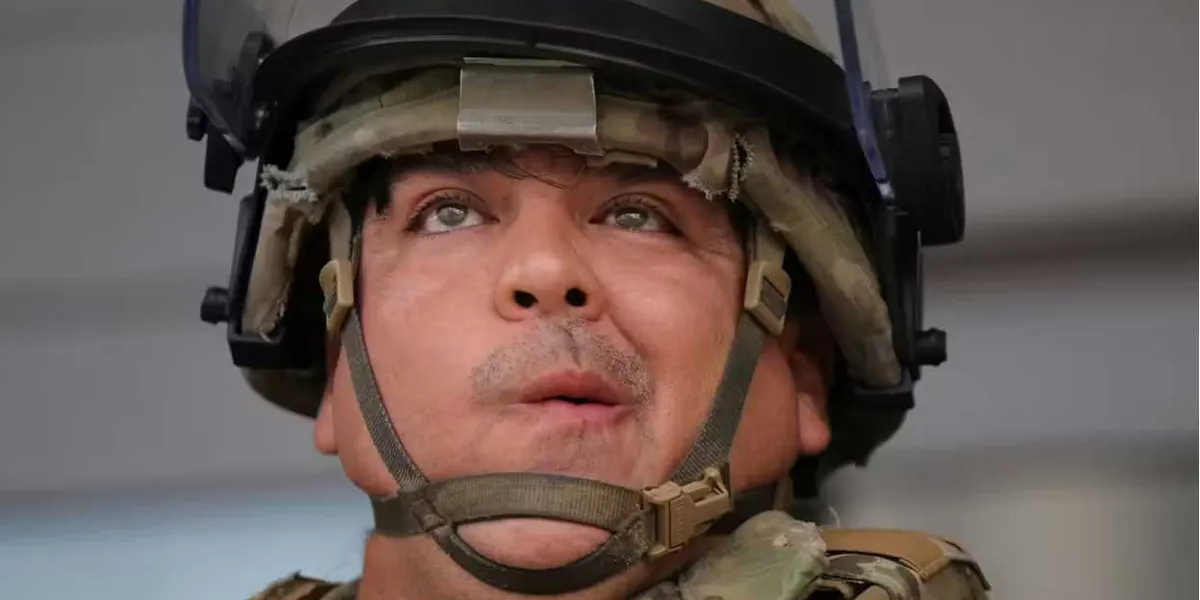
President Donald Trump could use the military to steal the 2026 midterms, which he and his fellow Republicans have panicked about losing, according to legal experts — although they emphasize that doing so would break centuries of precedent.
Read more Old Trump trick may help him get away with stiffing E. Jean Carroll
“Just this year, President Trump said he regrets that he did not order the National Guard to seize voting machines after the 2020 elections,” wrote Lawfare’s Natalie K. Orpett, Molly Roberts and Loren Voss on Wednesday. “Steve Bannon urged Trump to ‘call up the 82nd and 101st Airborne’ in 2026 to ‘get around every poll’ and make sure that only citizens are voting. Secretary of Defense Pete Hegseth, when asked whether he would refuse an order to deploy troops to polling places during the midterms, avoided answering—and falsely claimed that troops were deployed to polling places in 15 states under Joe Biden.”
The scholars pointed out that “the Constitution mostly reserves to the states the authority to administer elections, with a role for Congress” but that the Elections Clause is limited enough that a sufficiently creative person could try to poke holes in it.
“It defines only states’ power to ‘prescribe’ the ‘Times, Places and Manner of holding Elections’ and Congress’s power to ‘make or alter such Regulations,’” Lawfare explained. “It says nothing about other actions that might affect elections—ensuring security, for example. However, neither the Constitution nor any founding-era law affirmatively authorizes the president to involve the military in U.S. elections, and the few statutes that address the question at all prohibit it in most circumstances.”
After reviewing the evolution of election law in terms of this issue from the Constitutional era through the early republic, the Jacksonian era, the Civil War and Reconstruction, they focused on the bill often cited as a rationalization for using the military for domestic law enforcement.
“The Posse Comitatus Act (18 U.S.C. § 1385), enacted in 1878, ensured that the military could be used for law enforcement only in a set of drastic situations explicitly defined in law,” Lawfare wrote. “By the late 1880s, all major cities had civilian police forces.”
They continued, “Today, the Posse Comitatus Act is widely regarded as the critical limitation on domestic military deployment. The current version of the statute bars the use of any part of the Army, Navy, Marine Corps, Air Force, or Space Force ‘as a posse comitatus or otherwise to execute the laws.’ Posse comitatus literally means ‘power of the county’; legally, it refers to a group of people mobilized by officials such as a sheriff to enforce the law or keep the peace. The Posse Comitatus Act exists to keep troops—as opposed to civilians—from filling that role. But the rule isn’t ironclad: As described in our companion piece, the act itself carves out explicit exceptions, such as the Insurrection Act.”
The military is barred from following illegal orders in terms of domestic election interference, but statute does not provide for a specific cause of action. It serves as an affirmative statement of the law — and as further proof that Congress gives elections a special status. The standard limitations on domestic use of the military were apparently insufficient to safeguard elections; Congress deemed it necessary to pass three separate statutes to confer additional protections.”
Read more Trump foe obliterates DOJ’s reflecting pool vandalism charges
Lawfare concluded, “These laws have survived more than 160 years, across roughly 80 or so election cycles. And they haven’t gone unnoticed. The Justice Manual sets forth specific procedures for enforcing § 592. The Defense Department Directive on Defense Support of Civil Authorities, last updated in 2018, forbids ‘DoD personnel and National Guard in Title 32 status’ from ‘conduct[ing] operations at polling places and strictly refrain from activities similar to those prohibited by’ 18 U.S.C. §§ 592-594.”
Speaking with AlterNet in June, Democracy Defenders Fund Senior Counsel/Deputy Legal Director Pooja Chaudhuri explained that sending troops to the polls could very well intimidate citizens from voting.
“I think there are two things to consider,” Chaudhuri, who specializes in voting rights as well as election law litigation and advocacy, told AlterNet. “One is that the election is made up of voters, and so the outcome depends on people turning out to the polls and voting. The problem is … the chilling effect on voters.”
Chaudhuri continued, “When voters hear that ICE may be deployed to the polls, that mail-in voting rules are changing close to the election, a lot of voters might say, ‘I’m just not going to go out and vote.’ That could happen in many different ways. There are vulnerable communities — people may come from mixed-status families — they’re US citizens, but they might decide, “I’m not going to vote.” So one aspect is the chilling effect on voters that all of these actions would have.”
Dan Vicuña, the Senior Policy Director for Voting and Fair Representation at Common Cause, a nonprofit good government group, elaborated on other ways Trump is meddling with America’s free elections.
“What they all add up to is a desire to avoid any accountability to the voters in the midterm elections — to ensure, to preordain the outcome of a midterm that he thinks is going to go badly for him,” Vicuña told AlterNet. “We know, from the Big Lie of the 2020 election to spurring on a violent revolt to overthrow a free and fair election, that he has no respect for democratic norms, for the voice of the people. This is entirely about his own power and his own ego. He will even invest in protecting that ego and protecting his power at the expense of the needs of the public. People are suffering with high gas prices and affordability issues, and he does not care. All that matters is protecting his power, and he has no interest in whether he does that through democratic means.”
He added, “I think this all adds up to a desire to ensure that his party stays in power and his ability to do what he wants — to attack vulnerable communities — remains intact.”
Read more MAGA civil war: Glenn Beck’s company takes the fight to Leavitt