


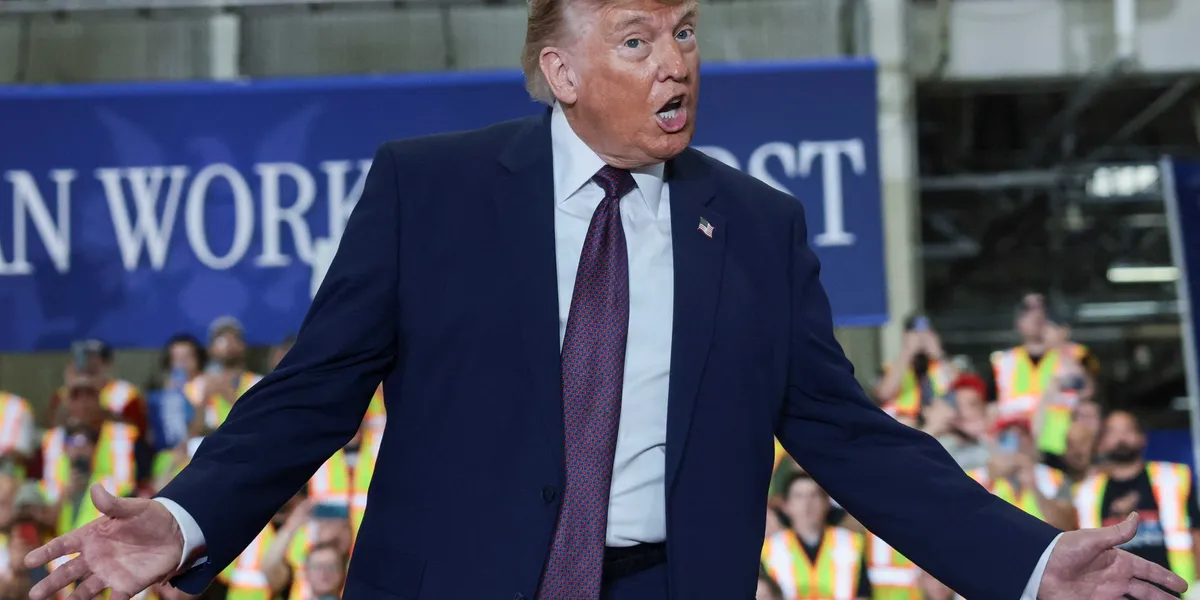
As the dust settles from President Donald Trump’s war with Iran and his envoys negotiate for something resembling lasting peace, analysts are debating the fallout from the conflict. On Wednesday, one leading naval war educator laid out the key lessons from the war and explained why “the damage will not be undone when the Trump administration is gone.”
Read more White House staff can’t even keep all of Trump’s revenge targets straight: new book
Writing for the Atlantic, Johns Hopkins University strategic studies expert Eliot A. Cohen began by explaining why the peace plan as it stands now is “a capitulation masquerading as an agreement.” Trump’s memorandum of understanding (MOU) enriches the Iranian regime “to the tune of hundreds of billions of dollars,” betrays U.S. allies and may end up providing Iran with ongoing control over the Strait of Hormuz. From there, Cohen lays out several key lessons that emerged from the conflict, a disaster that he says was driven by “simple arrogance.”
First, while the Iranian military was badly damaged, “the regime has now experienced viscerally what it before knew only theoretically: the power of its hold on the Strait of Hormuz. It has demonstrated its reach throughout the region, and, to itself and to those inclined to align with it, its enduring strength vis-à-vis the United States.”
Second, the conflict showed the limitations of Israeli Prime Minister Benjamin Netanyahu’s hostile approach. According to Cohen, Netanyahu has “presided over a shocking deterioration in Israel’s international position, the collapse of its support among Democrats and many Republicans in the United States and a resumption of a war it thought it had won against Hezbollah in Lebanon.”
Then there were the wider geopolitical lessons. Writes Cohen, “No one can go back to believing that oil supplies passing through the Strait of Hormuz are reliably secure. The Arab Gulf States will have to choose between straightforward appeasement of Iran and submission to many of its wishes—the choice apparently made by Qatar and possibly Oman — and a more mixed posture of bribes and armament such as that of the United Arab Emirates.”
Read more ‘Desperate’ Trump caught in a ‘geopolitical trap’ of his own creation
For militaries around the globe, “the war confirms some of the great lessons of the Russia-Ukraine war: that it is much easier to deny access to or use of key terrain than to seize it; that there is an urgent need to shift to cheaper, mass-produced precision munitions for both offensive and defensive use; that numbers matter; that air supremacy — the kind of control the Allies exerted over Normandy beaches in 1944, for example—is a thing of the past, having been subverted by ballistic and cruise missiles as well as drones; that swift, smashing victories are usually chimeras of the political imagination; and, unfortunately, that indifference to the suffering of one’s own population and a readiness to inflict misery on an opponent’s civilians pay strategic dividends.”
Finally, and “most of all, this war has demonstrated profound American weaknesses.” As Cohen explains, “The damage will not be undone when the Trump administration is gone, two and a half long years from now, because it is the American way of war itself that this conflict has called into question.”
According to Cohen, the American approach was “a strategic and operational style relying on relatively small, extremely advanced forces that did not have mobilizational depth behind them — not people, not munitions, not platforms. It was predicated on having enough time to build up to confront an enemy, as was the case in both the Gulf and Iraq wars. It rested on secure bases near the enemy, which would suffer only attacks that could be easily parried. It assumed that the initiative would rest with the U.S., and that allies would play along, despite whatever doubts they might have. It underinvested in both active defenses (e.g. surface-to-air missiles) and passive defenses (e.g. hardened aircraft shelters).” The weakness to this stance, he argues, can no longer be denied.
In the end, Cohen concludes, “Much of the problem was simple arrogance. Hubris, according to Greek myth, is punished by the goddess Nemesis. Unfortunately, not just the guilty parties will feel her lash. And the worst of it is that America’s political and military leaders may not yet realize that that is what is happening, nor just how far-reaching her punishments may be.”
Read more ‘Embarrassed to be an American’: Larry David unleashes on Trump UFC ‘travesty’