
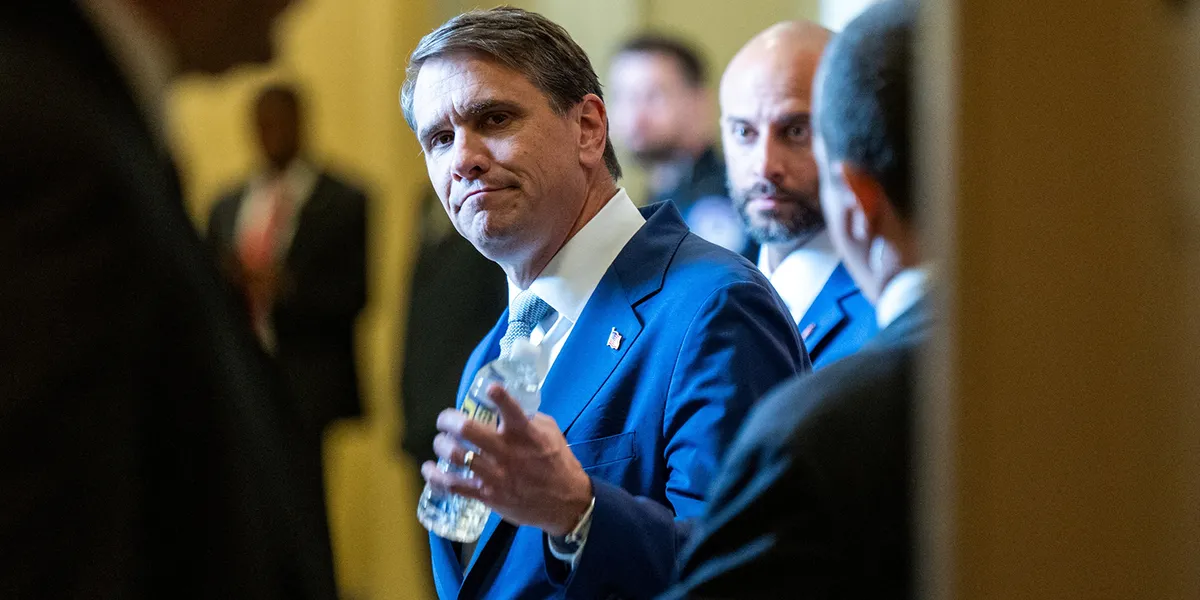
Acting Attorney General Todd Blanche and other members of President Donald Trump’s administration have refused to file the statement Judge Leonie M. Brinkema demanded in her judicial order last week.
Read more Former MAGA man marvels at how America went from Obama to ‘crazy’ Trump
AlterNet reported that last Friday, Judge Brinkema said she wanted to “avoid any further litigation in this civil action,” and asked Blanche along with Associate Attorney General Stanley Woodward, Jr. and Secretary of the Treasury Scott Bessent to submit a declaration they wouldn’t take any further action to create Trump’s slush fund.
The deadline for that was June 19.
Judge Brinkema had demanded that the filing be submitted “under the penalty of perjury.”
But instead, something else was submitted, according to legal reporter Chris Geidner. The Justice Department didn’t merely ignore the requirement; it submitted another filing
“The acting attorney general has testified before Congress that the Fund is ‘not going forward, period,'” the DOJ filing claims. “Undersigned counsel have twice signed briefs reaffirming that ‘the Fund is not going forward.’ And counsel for Defendants has twice said substantially the same thing in open court. All these statements were made against the backdrop of serious penalties for falsity.”
Demanding that the Cabinet officials, in particular, be burdened with signing a document for a court is simply too far, the filing argues.
According to the DOJ, these facts mean “there is no reason why declarations should affect the Court’s mootness analysis.” They also say that having such officials sign such a declaration is a “separation of powers.” The inverse could also be argued that if so many statements have been previously made, then a declaration shouldn’t be a problem.
The filing goes on to attempt to relitigate an argument already lost, Geidner commented.
Read more Insiders gripe about GOP agenda detonated by Trump ‘landmines’
“Accordingly, the Court’s demands are unnecessary. And it’s presumption that mootness can arise only by compelling testimony from three senior government officials ‘implicate[s] separation of powers concerns.’ As stated multiple times, the Fund is not moving forward. The transcript of the Acting Attorney General’s equivocal testimony to Congress is attached,” the DOJ says.
The filing was signed by both Woodward and Andrew Block, senior counsel to the associate attorney general.
The judge said last week, “If such a declaration is not filed by June 19, 2026, the Court will issue a Scheduling Order and require defendants to file a responsive pleading …”
The Trump administration’s defiance of Judge Brinkema’s order reflects a broader pattern of executive resistance to judicial oversight.
Legal experts have noted that the DOJ’s response—citing prior statements and separation of powers concerns—amounts to an end-run around the judge’s explicit authority to compel sworn testimony. The administration’s argument that previous congressional testimony and court statements suffice contradicts the judge’s determination that a formal declaration under penalty of perjury was necessary to resolve the case and prevent further litigation.
Judge Brinkema now faces a critical decision: whether to enforce her order through contempt proceedings or accept the administration’s reframing of mootness. The case underscores ongoing tensions between executive accountability and claims of constitutional separation of powers, with significant implications for judicial authority to oversee government compliance with court orders.
Read more Strategist exposes how ‘delusional’ Trump got himself neutered