




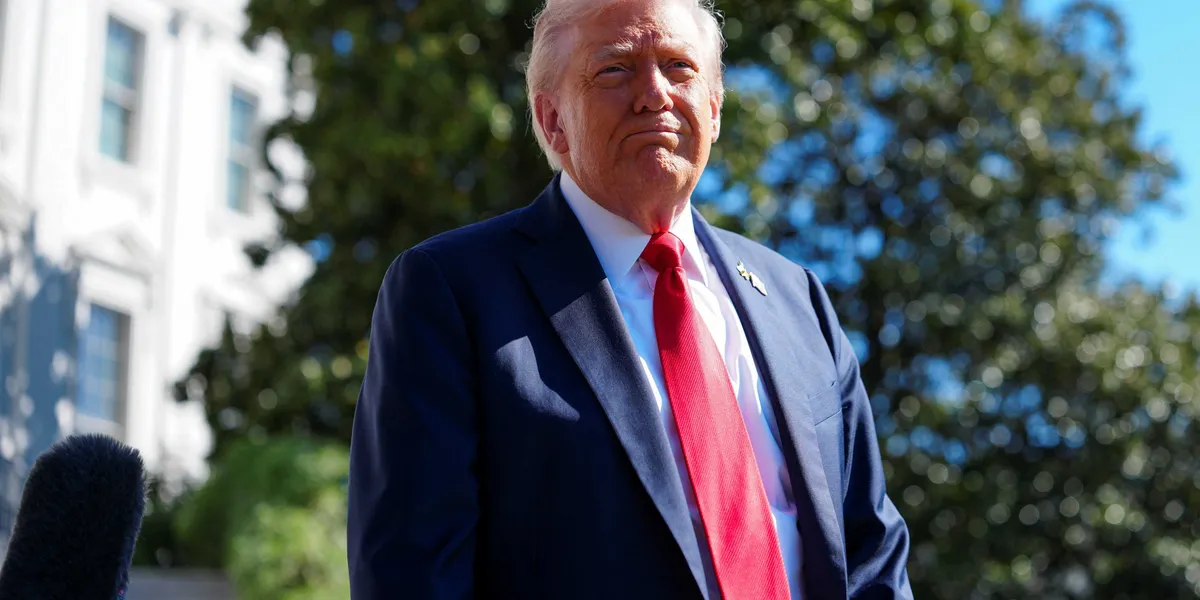
President Donald Trump’s tariffs, war against Iran and intimidation of the Federal Reserve are widely regarded as self-inflicted economic wounds that have, among other things, led to the national debt surpassing $40 trillion. In fact, according to a recent report, the debt has ballooned so badly that even economists who previously didn’t focus on deficit issues are increasingly alarmed.
Read more Christian MAGA group accused of playing loose with taxpayer money
“One camp of economists has been warning about the perils of high debt for years: Budget hawks predicted that if the country kept spending and didn’t raise taxes enough to keep pace, the resulting fiscal crisis could be devastating,” wrote The Atlantic’s Will Gottsegen on Wednesday. “But others—the doves—have brushed it off. Their perspective was that as long as the U.S. GDP was growing faster than the interest rate it was paying on its debt, the Treasury would be able to keep rolling over its bonds without too much of a problem. For much of the 2010s, this was essentially the status quo, and debt panic was muted.”
Adding that America has yet to reach a true crisis such as the Treasury market completely failing, Gottsegen pointed out that previously “deficit dove-ish” economists like the Budget Lab at Yale’s Martha Gimbel are nevertheless recognizing that interest rates will remain elevated for a while because of the debt.
“Why are rates rising?” Gottsegen asked. “The Fed’s reaction to inflation is one reason. It may also have something to do with the extreme investments being made in AI, and these companies’ demand for credit. And it’s likely connected to the deficit panic—concern about the expansion of the national debt and the government’s ability to sustain it. Investors are starting to think of long-term Treasurys as riskier than they once did, and they’re demanding more money in exchange for taking on America’s debt. At the same time, the federal government has shown no real appetite to pull its two main levers for reducing the debt: cutting spending and raising taxes.”
For this, Gottsegen establishes a dynamic that lays blame partially at the feet of both parties.
Read more GOP caught in the crossfire in Trump’s nightmare war on auto industry
“This political inertia likely stems from the fact that the two most important levers for reducing the debt—raising taxes and cutting spending—remain unpopular among lawmakers and voters alike,” Gottsegen wrote. “Bessent suggested last week that he’s interested in a third option: stimulating the economy enough that it once again outpaces interest rates. But without a concrete plan in place, this sounds like wishful thinking, especially when the more obvious solutions to fix the deficit remain untapped.”
Speaking with AlterNet, economist Dr. Robert J. Shapiro — a senior adviser to President Bill Clinton who helped him lead America to balance the budget and create four surpluses in the 1990s — broke down exactly the extent to which Trump is responsible for the current economic calamity.
“What [President Joe] Biden had done would have led to a gradually shrinking deficit over the next ten years, because the economy is growing,” Shapiro told AlterNet. “What Trump does instead is say, ‘No — we’re going to have huge deficits as far as the eye can see,’ meaning deficits equal to six or seven percent of GDP, which is unprecedented in the postwar era. It’s a real outlier. And that’s driven entirely by his tax changes, which carry enormous budgetary costs, plus a wholesale, large-scale increase in defense spending. So how much of this is Trump? A majority of it — not all of it, but a majority.”
Shapiro blamed this problem on tariffs, which are essentially “a sales tax paid by importers”; the war in Iran, which has led to Iran closing the Strait of Hormuz and thereby raising oil prices; and the Federal Reserve, which Trump has pressured to cut interest rates, and although that has yet to happen, “the market believes there’s a significant possibility that he will, given the pressure Trump has been putting on him — and in anticipation of that, they’ve been driving long-term rates up.”
Read more Trump saddles swing state GOP with a new $69 million bill