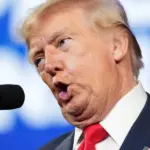
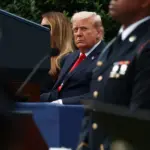
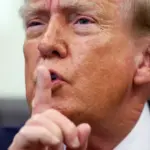
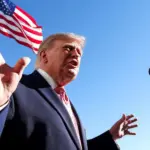




President Donald Trump keeps getting the Supreme Court to capitulate to him, whether by letting him construct his ballroom, allowing him to fire previously-protected federal officeholders and permitting him to gut the Voting Rights Act. Now a former Republican presidential adviser, namely to President George W. Bush, is warning that the Supreme Court is destroying the Constitution by repeatedly taking the knee to Trump.
Read more Trump’s gargantuan ego will be his downfall — and history proves it
“The American Constitution is made of paper,” Steve Schmidt wrote on Substack on Sunday. “That is among the most important things James Madison ever tried to teach us. The Constitution has no army. It cannot arrest anyone. It cannot compel a senator to show courage, a judge to exercise independence, a president to exercise restraint, or a citizen to care.”
He added, “It is words. The American republic has endured not because words enforce themselves, but because generations of citizens and officials have made them real by insisting that no one — not a president, judge, billionaire, or political faction — stands above the law. That is the rule of law.”
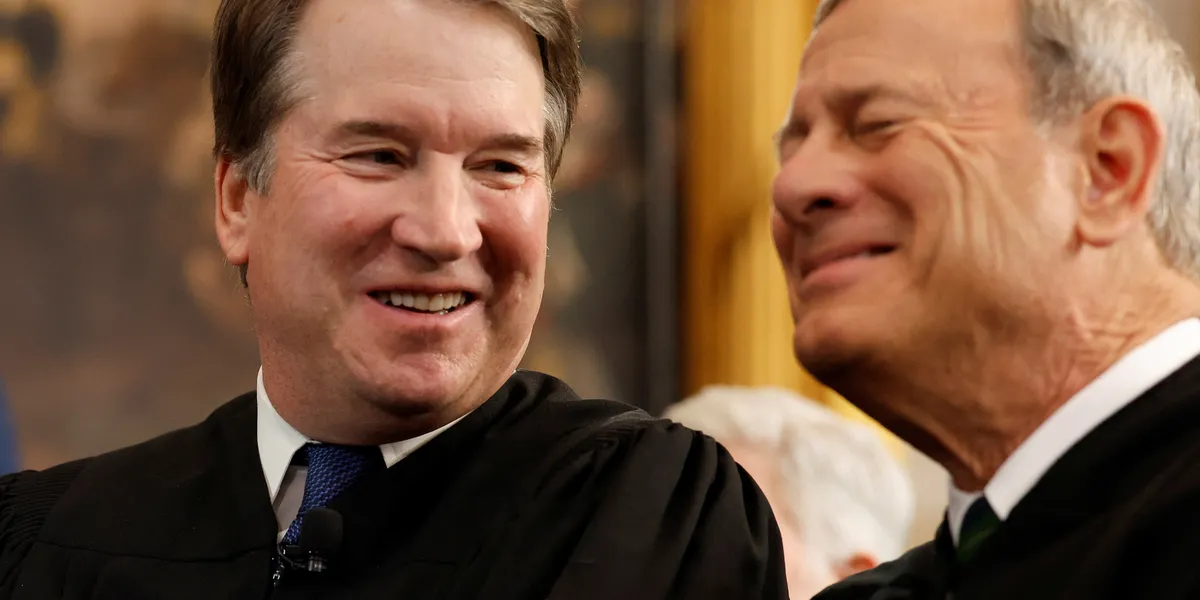
After describing The Federalist Papers and how they established guardrails to avoid corruption of power, Schmidt wrote that Chief Justice John Roberts has led the betrayal of the Constitution’s promises.
“At his 2005 confirmation hearing, John Roberts described representing a private client against the United States,” Schmidt wrote. “If the law favored his client, he said, ‘all that power and might would recede in deference to the rule of law.’”
He added, “That, he explained, was what Americans meant by a government of laws rather than men. He then stated the central principle: ‘without the rule of law, any rights are meaningless.’ Roberts invoked Ronald Reagan’s observation that the Soviet Constitution promised wonderful rights, but made them ‘empty promises’ because the Soviet system lacked an independent judiciary capable of enforcing them. A right written on paper is not liberty unless institutions and citizens can make it binding.”
Read more ‘He’s dead’: Election guru writes Trump’s political obituary
Schmidt then went on to describe how Roberts’ court has overturned a lot of those precedents, in particular keeping the president from viewing himself as above the law in a number of contexts.
“The normative criticism is narrower and more consequential: by expanding the sphere of presidential conduct insulated from criminal accountability, the decision may weaken the practical rule of law — especially when Congress and other institutions fail to provide effective checks,” Schmidt wrote.
He added, “That concern does not mean the Court held that presidents possess unlimited power or general immunity. It means that constitutional limits become less meaningful if the institutions responsible for enforcing them do not compensate for the limits placed on criminal prosecution.”
Additionally, Schmidt wrote “in 2005, Roberts described the rule of law through the image of governmental ‘power and might’ receding when law required it. In 2024, he joined a decision holding that criminal prosecution must yield, in defined circumstances, to constitutional immunity for presidential official acts. The tension is clear: if presidential immunity is broad and other institutions do not resist abuse, legal limits may exist formally, while becoming difficult to enforce in practice.”
Read more Trump just made the world a far more dangerous place: analysis