





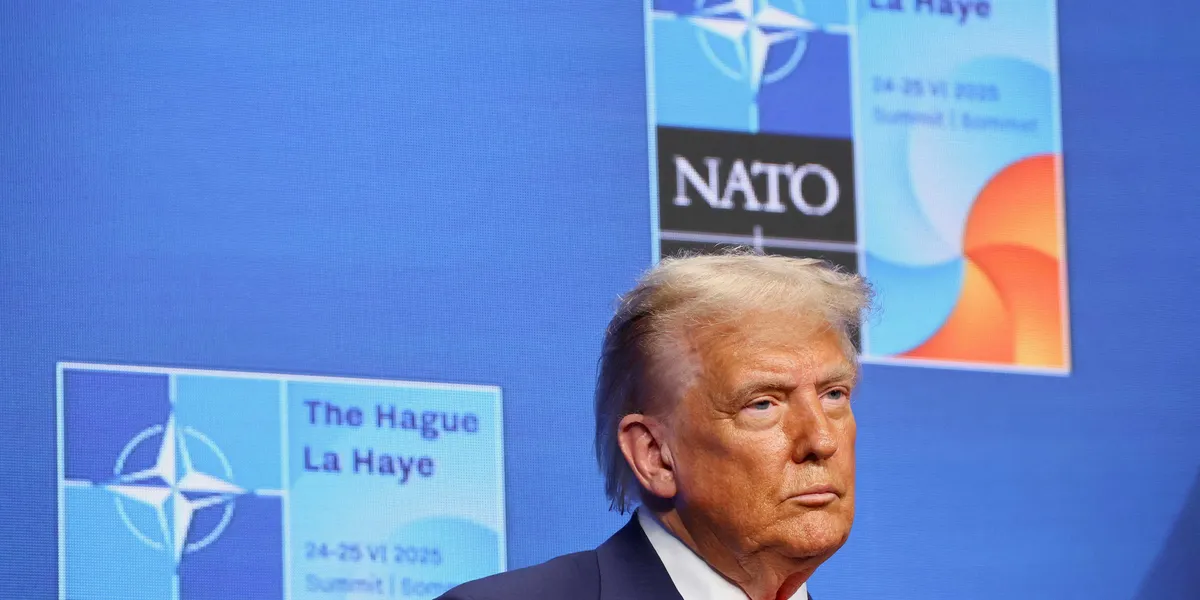
President Donald Trump’s alienation of key allies is creating a world in which the world views the U.S. as a major threat to be avoided and prepared for, one former White House deputy warned for The New York Times, and the situation is leaving the country at risk of a “fundamental rupture” under future presidents.
Read more Trump’s more ‘communist’ than he wants to admit: Bezos’ paper
Jon Finer is a journalist and diplomat who previously served as deputy national security adviser during the Biden administration, and currently serves as a “distinguished senior fellow” at Yale Law School and the Center for American Progress. In a new opinion piece published by the Times on Sunday, he sounded the alarm about how Trump’s treatment of global allies is “already costing us” in the near term, and about how it will leave us weakened in the years to come. Whereas three years ago, he explained, Europe navigated the threats posed to it by China, now it must do so for the U.S. instead.
“Three years later, de-risking from predatory superpowers remains the fundamental challenge facing European leaders, but China is no longer the main country of concern: The United States is,” Finer explained. “As they publicly seek to mollify a vindictive American president, policymakers across Europe are quietly working to reduce their decades-long dependence on the United States by increasing their own defense, energy and technology industries and diversifying their relationships with other nations. That dynamic was on display last week at the NATO summit in Ankara, Turkey, where President Trump renewed his threats against the U.S. allies Denmark and Spain.”
He continued: “It’s not just Europe backing away from the United States. Leaders of America’s partners in Asia and the Middle East are quietly doing the same. The second Trump administration’s ostentatious corruption, trade conflicts, military adventurism and mercurial artificial intelligence regulation have produced a new moment in international affairs: a nearly global grand strategy of countries distancing themselves from the world’s most powerful nation.”
Read more Republicans plead for more money as race in 3-time Trump state looks unwinnable
This “sea change” for the U.S. is costing it the benefits to the “economy and national security” that came with being an ally that other nations relied on for military protection and technology. As these allies now move away from the U.S., Finer warned that it is “limiting our ability to respond to China’s industrial advantages.”
“One doesn’t have to look far to see the costs,” Finer argued. “The lost war against Iran, the first in which we didn’t have diplomatic or military alignment with our closest allies in Europe and Asia, caused a spike in gas and fertilizer prices that contributed to a $132 billion hit to American consumers, according to Moody’s. Even as Europe increased its military spending by 14 percent, to $864 billion, in 2025, its military purchases from American companies actually fell by almost half. Mr. Trump’s immigration policies are also driving countries away. Four million fewer visitors came to the United States in 2025 than in 2024, at an estimated cost of more than $8 billion. America is hemorrhaging future skilled labor as enrollment by international university students dropped 17 percent last fall from the prior year, already costing universities at least an estimated $1 billion, and potentially costing the country hundreds of billions in future revenue.”
He concluded: “As our partners enhance their own resiliency to us, future American administrations must prepare plans for avoiding a more fundamental rupture. Whoever succeeds Mr. Trump will be the first to take office with countries around the world asking not what America can do for them, but rather seeking to do as much as possible without us. The first step to coping with the fallout is realizing just how much — and how permanently — the world has changed.”
Read more Conservative legal expert touts new path to fight back against Trump’s unchecked power