







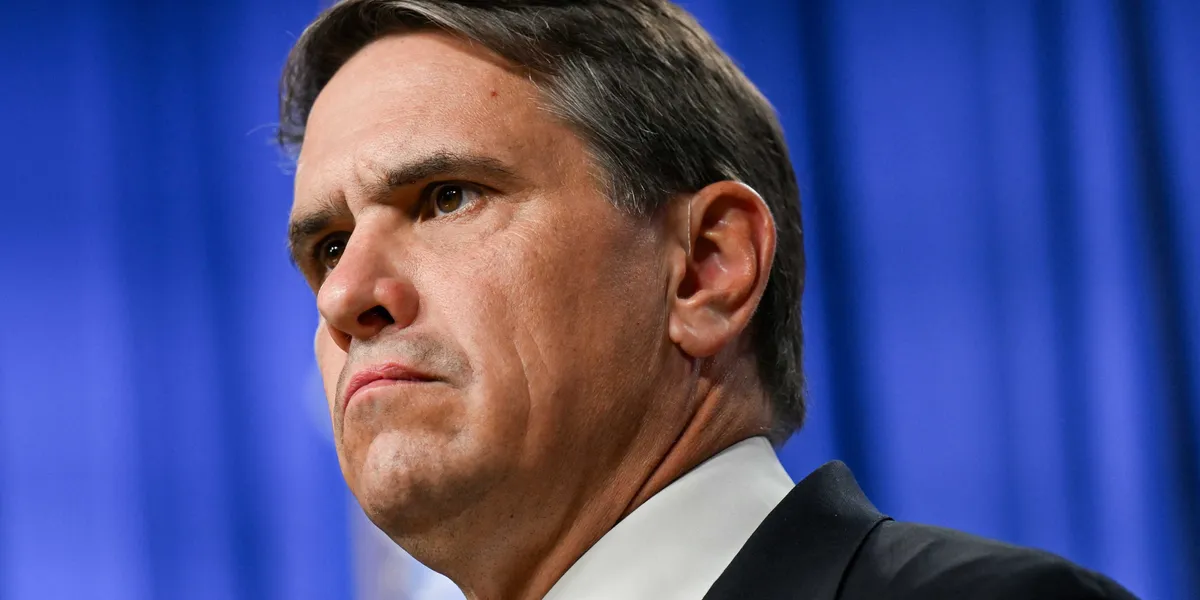
Democratic Minnesota Gov. Tim Walz became yet another target of the Donald Trump-era U.S. Department of Justice (DOJ) when the offices of him and other Democratic officials in that state received immigration-related grand jury subpoenas. But those subpoenas were invalidated by U.S. District Judge Patrick Schiltz — a development that attorney Lisa Needham describes as a major humiliation for the Trump DOJ.
Read more ‘Trump wears thin after a while’: Evangelicals bail on lame-duck president
Needham, in scathing analysis for her Public Notice column, argues, “One thing that is becoming increasingly clear as President Trump’s second term grinds on is that the lower courts have had enough and aren’t interested in entertaining the administration’s persistent lawlessness. In a truly remarkable setback for the Department of Justice, the chief judge of the United States District Court in Minnesota, Patrick Schiltz, quashed six grand jury subpoenas targeting state and local elected officials, saying they ‘were not issued to investigate, but to harass, coerce and retaliate.'”
Walz, who was Democratic nominee Kamala Harris’ running mate in the United States’ 2020 presidential election, argued that the subpoenas were politically motivated — and Schiltz expressed similar views in his biting rebuke of the Trump DOJ.
Needham emphasizes that it’s rare for a federal judge to throw out federal grand jury subpoenas.
Read more ‘Stonewalled’: Trump hitting a brick wall with his latest obsession
“When it comes to grand jury subpoenas, the government enjoys a remarkable amount of deference from the courts,” Needham writes. “Those subpoenas are presumed to be reasonable, and a party challenging them has the burden of overcoming that presumption of regularity. Additionally, unlike search warrants, grand jury subpoenas don’t require a showing of probable cause. Because of this, it’s very hard to get out from under a grand jury subpoena. Courts can quash them if ‘compliance would be unreasonable or oppressive.’ This usually involves an overbroad demand, where the government asks for tons of records that have no meaningful relevance to the case. Courts can also quash a subpoena if the ‘dominant’ purpose of it is improper. Investigations initiated out of malice or with the intent to harass fall into this category. You will probably not be surprised to learn that these subpoenas managed to run afoul of both of these.”
The attorney continues, “But the evidence showing that the subpoenas were issued ‘as part of an unconstitutional effort to coerce Minnesota officials into assisting the federal government with enforcing civil immigration laws and to harass and retaliate against them for failing to do so’ was so strong that the court quashed the subpoenas for that reason alone.”
Read more ‘Trump fever is breaking’ as GOP privately fears ‘administration is dead in the water’