

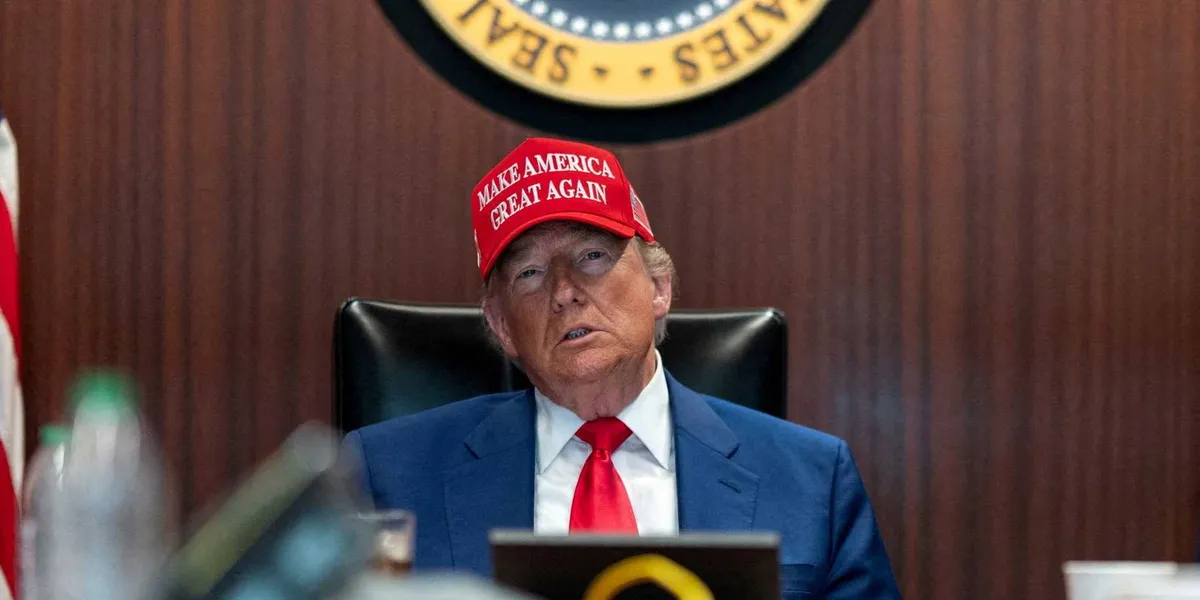
When U.S. President Donald Trump launched a war with Iran in late February, he insisted that doing so was a matter of national security and that his goal was to prevent the Iranian regime from developing a nuclear weapon. But according to The Atlantic’s Jonathan Lemire, the war ended up hurting the United States and Trump much more than it hurt Iran.
Read more Veteran attorney breaks down recovering from ‘the trauma of Trump’
“President Trump lost,” Lemire writes in The Atlantic. “The war he waged against Iran promises to conclude in a humbling whimper with the signing of a ceasefire agreement later this week. The United States is left weaker — diminished militarily, strategically, economically, and perhaps morally. The war, which the United States fought alongside Israel, accomplished none of the goals that Trump named at the outset. Instead, it only empowered the hardliners in Tehran and arguably emboldened them to someday seek a nuclear weapon.”
Lemire continues, “Despite that, the president was so desperate for the war to end that he repeatedly backed off his threats — allowing Iran to call his bluff — and upbraided his close ally Israeli Prime Minister Benjamin Netanyahu for responding to attacks in the region in a manner that jeopardized the negotiations.”
Trump, on Sunday, announced a ceasefire agreement with Iran that reopens the Strait of Hormuz — a waterway vital to the flow of oil in the Middle East. But according to Lemire, the “tentative deal” is not the “clear win” for the U.S. that Trump claims it is.
Read more Senate threatens to stop Pentagon chief’s travel until it can probe his deeds
“Within the administration,” Lemire explains, “there is a divide on the deal, but Trump sided with those advocating for the war to wind down, no matter the terms, as fears mount about the economic toll on Americans and the political costs for Republicans in the midterms. Trump’s own anger masks a desperate desire to find an offramp from a conflict that did not go the way he had planned, an outcome that has threatened to leave the United States — and Trump — reduced in the eyes of the world. For a decade, Trump has dominated the global stage and wielded extraordinary executive power. But now, he is saddled with low poll numbers and unhappy Republicans, and he may soon have to contend with a Democratic Congress.”
Trump’s Iran deal, Lemire observes, is drawing strong criticism from some GOP hawks — including radio host Erick Erickson, who argued that “Trump has surrendered to Iran.”
“As the war dragged on, it became clear that Trump’s goals for the conflict were going unfulfilled,” notes Lemire, a former Associated Press (AP) reporter who is often featured on MS NOW. “The Iranian navy was damaged, but Tehran’s ballistic-missile capability survived, as did its ties to militia proxy groups such as Hezbollah and the Houthis. The hardline regime in Tehran appears poised to sell oil again and receive up to $300 billion in funding from Gulf states that it could use to rebuild. Iran has tightened its grip on the Strait of Hormuz and demonstrated that it can close the waterway at will. Although Tehran has promised not to build a nuclear weapon, no enforcement mechanism has been established.”
Read more Tell-all book leak exposes Trump pitting wannabe successors against each other