







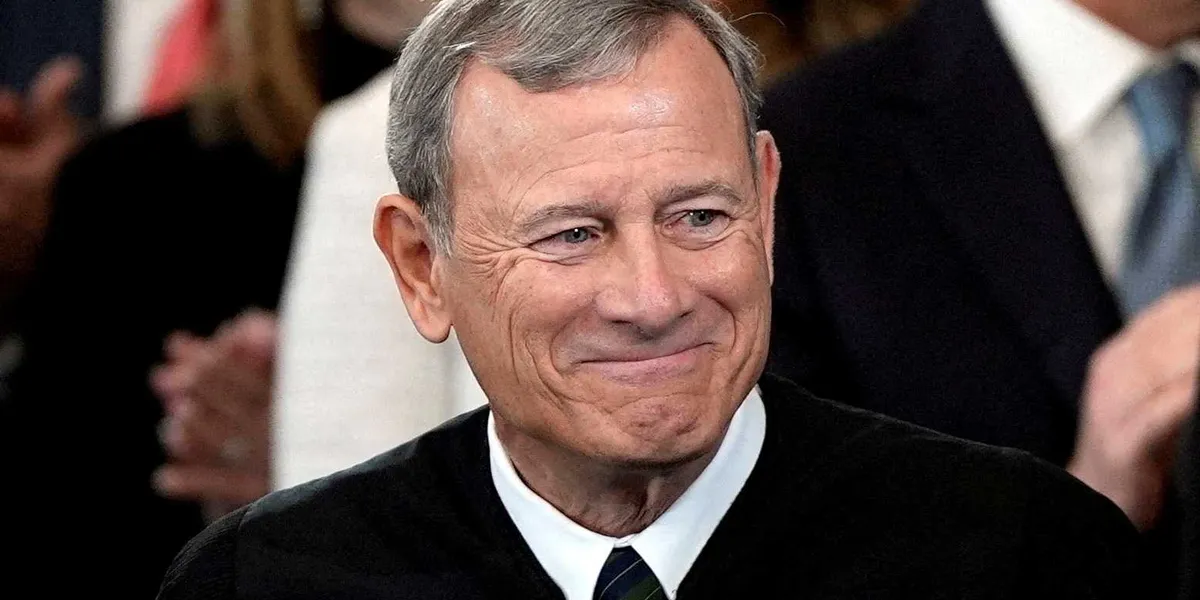
Almost 50 years ago, on July 2, 1976, the U.S. Supreme Court handed down its hotly debated ruling in Gregg v. Georgia — which ended a de facto moratorium on the death penalty and cleared the way for individual states to move forward with executions. Austin Sarat, a professor of jurisprudence and political science at Amherst College in Massachusetts, examines the decision’s 50th anniversary in Slate and lays out some reasons why he considers it one of the High Court’s worst rulings ever.
Read more Trump launches ‘unprecedented’ new attack on US citizens
The Supreme Court, under Chief Justice Warren Burger, temporarily halted the death penalty in 1972 with its Furman v. Georgia ruling — which, according to legal scholars, amounted to a de facto moratorium on capitol punishment in the United States. But the Burger Court gave the death penalty the green light with Gregg, whose dissenters included Justices Thurgood Marshall (the Court’s first Black justice) and William J. Brennan Jr. (an appointee of GOP President Dwight D. Eisenhower in 1956).
“So far this year,” Sarat explains in Slate, “15 people have been executed in the United States. More than half of them were Black men; nearly all of them were put to death in Florida, Oklahoma, or Texas. Last year, the number of executions was 47, the largest number in 16 years. Fifteen of them were people of color: 14 Black people and one Hispanic person. Fifty years after the Supreme Court reinstated the death penalty as constitutionally permissible after a brief ban, these figures are a reminder that executions still play a role in American life.”
Sarat adds, “If the Trump administration gets its way, they will play an even bigger role. Capital punishment may be ‘alive’ in the United States, but it is not well.”
After half a century, Gregg v. Georgia remains the law of the land — and the death penalty is determined on a state-by-state basis. Many blue states have abolished capitol punishment, while swing states like Pennsylvania have what is, in effect, a moratorium. Pennsylvania’s last execution was Gary Heidnik, who died by lethal injection in 1999.
Read more Ex-‘hardcore MAGA activist’ details game plan for saving others from Trump
Sarat argues that the way the death penalty is applied makes a compelling case for overturning Gregg.
“The Court’s decision in Gregg was an exercise in smoke and mirrors and wishful thinking,” Sarat writes. “Fifty years of constitutional fiction is enough. It is time to face the fact that Gregg failed to put the death penalty on a sound footing and that nothing can improve on Gregg‘s frailties…. Since Gregg was handed down, we have learned that arbitrary and capricious action has remained characteristic of America’s death penalty system…. Studies have shown that even after Gregg, the race of the victim plays a powerful role in determining who gets a death sentence. “
The Amherst professor continues, “Someone who murders a white victim is much more likely to receive such a sentence than someone who murders a person of color, regardless of the defendant’s race.”
Read more On-air Trump meltdown reveals ‘widespread awareness’ of his unmistakable ‘mental illness’