







If there is one lesson that has emerged from the 2026 midterm election primaries, it is that Democrats and Republicans react very differently to ultra-rich candidates.
Read more Political scholar reveals the real reason Trump picked Blanche
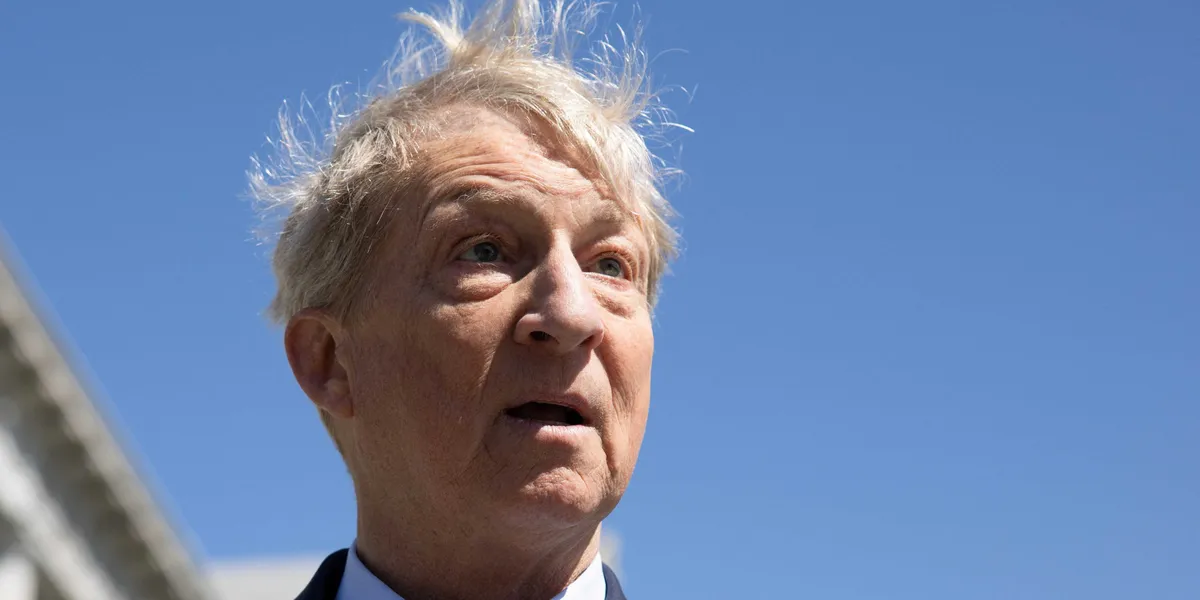
“Tom Steyer ran for governor of California as a climate crusader endorsed by Bernie Sanders’ political organization, Our Revolution,” wrote MS NOW’s Armand Manoukian on Thursday. “He also spent at least $216 million of his own money on the race — and in the end, that was the only thing voters seemed to remember. With nearly 58 percent of the vote counted, he is running third.”
“The timing is unkind to the ultrawealthy,” Manoukian wrote. “In a March YouGov survey, 77 percent of adults said the wealthy have too much political power, and 52 percent said the government should try to reduce the share of wealth held by billionaires. More than half of adults told a May Politico poll that cost of living is the ‘worst they can remember.’ Against that backdrop, self-funding candidates — once a recruiter’s dream — have become a harder sell.”
Steyer is not alone in falling prey to this problem. In San Francisco, Saikat Chakrabarti fell short in seeking retiring speaker emerita Nancy Pelosi’s House seat. Former venture capitalist Eric Jones similarly fell short in California’s 4th congressional district. By contrast, Republicans still reward candidates with deep pockets.
“In South Dakota, political newcomer Toby Doeden, a car dealership owner, steered $4 million into his own campaign and outpolled the sitting governor in the GOP gubernatorial primary,” Manoukian wrote. “In Georgia, Rick Jackson, a billionaire healthcare executive, jumped into the Republican gubernatorial primary as a political unknown, pledging to spend $50 million of his fortune, then spent closer to $80 million.”
Read more Trump bails out his loyal supporters as economy tumbles: report
Manoukian added, “Running on the slogan ‘From Foster Care to Billionaire,’ he blanketed local television and advanced to a June runoff, knocking out Secretary of State Brad Raffensperger. He’ll face Lt. Gov. Burt Jones, who has funded his own campaign to the tune of $17 million.”
MS NOW’s Ja’han Jones similarly reported on the waning influence of Big Tech executives on Wednesday.
“Multiple candidates backed heavily by Big Tech executives floundered in Tuesday’s primary elections, as concerns about the corrosive effects of new technologies such as artificial intelligence tools continue to mount,” Jones wrote. “The clearest examples came in California, where tech executives spent ungodly amounts of money attempting to make sure their chosen candidates emerged victorious.”
To illustrate his point, Jones listed California gubernatorial candidate San Jose Mayor Matt Mahan, who lost despite being funded by tech executives like Google co-founder Sergey Brin and pro-Trump Palantir co-founder Joe Lonsdale, as well as Ethan Agarwal, a tech investor funded by pro-Trump Silicon Valley executive Marc Andreessen and who challenged Rep. Ro Khanna (D-CA) by opposing Khanna’s proposed one-time 5 percent wealth tax on billionaires.
Read more Trump official exposes the GOP’s sadistic campaign to destroy healthcare